


les nymphéas d’olivier debré
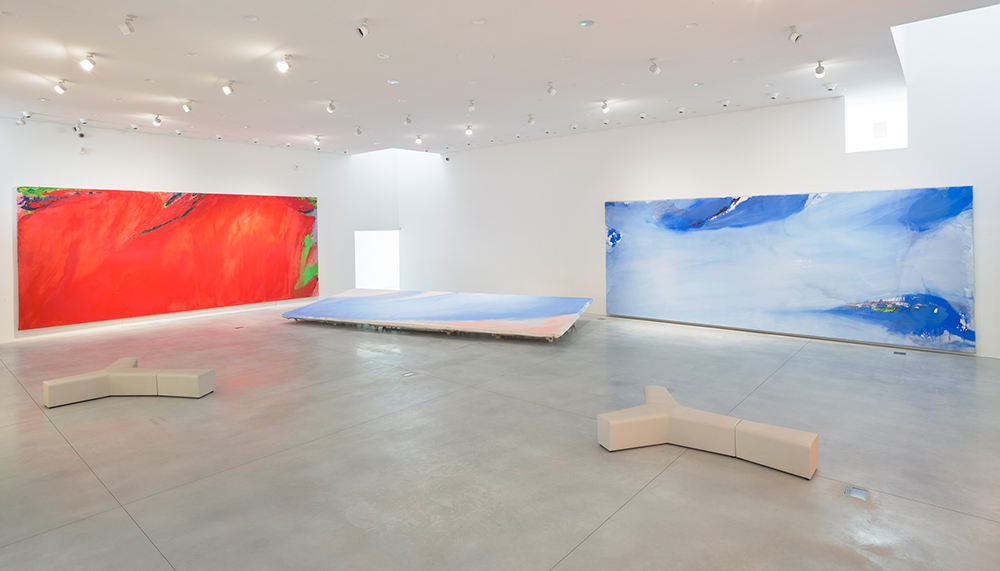
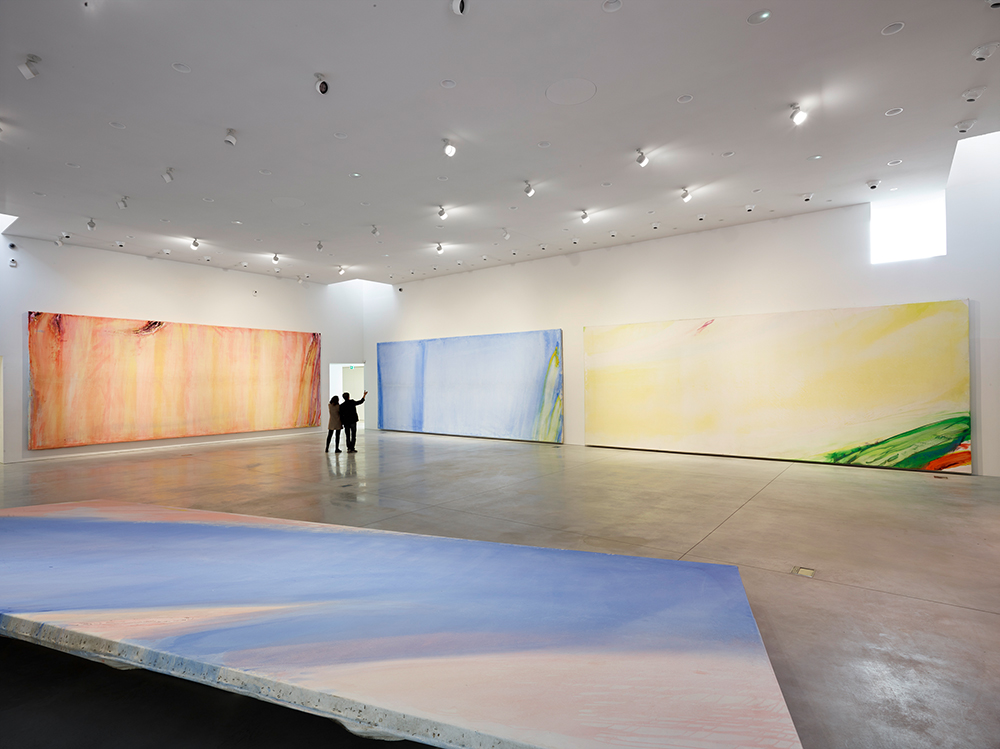


Six monumental paintings in the exhibition encapsulate the essence of Olivier Debré’s work. They summarise a lifetime of visual experimentation focused on concrete expression of the intangible. The artist incorporates space and light going on to unleash them in the form of colourful layers filling the viewer’s space. Created as components of one and the same series in 1990-1991, they are reunited for a public exhibition for the first time at the cccod.
The title of the exhibition, drawing a symbolic link between Claude Monet’s Nymphéas (water lilies) and Debré’s large paintings, alludes to the entire history of 20th century abstraction. Monet’s later works were indeed considered by certain artists, Abstract Expressionists for example, the first illustrations of a form of abstraction in painting. ‘Olivier Debré’s Nymphéas’ does not intend to imply a direct influence of the Impressionist on the Loire valley artist, but instead highlights conceptual similarities between their respective creative processes.
The idea of an abstraction that draws its inspiration from nature, from the sensory world, has always been controversial. This paradox is however often highlighted regarding the work of Debré, who enjoyed immersing himself in the landscape, on the banks of the Loire for instance, to paint.
But if Debré is indeed a landscape painter, he recreates mental landscapes on the surface of the canvas: what could be more abstract?
These are not direct representations of the river, but interpretations of its truly visual fluidity, liquidity. In the face of these works, the gaze escapes, flourishes and wanders at the whim of the surface, becoming lost in the use of transparency and at times dry, at times wet subject. For Debré does not work with subject solely to be striking, he provides his colours with a tactile relief and captivating presence that reverberates well beyond the limits of the canvas.
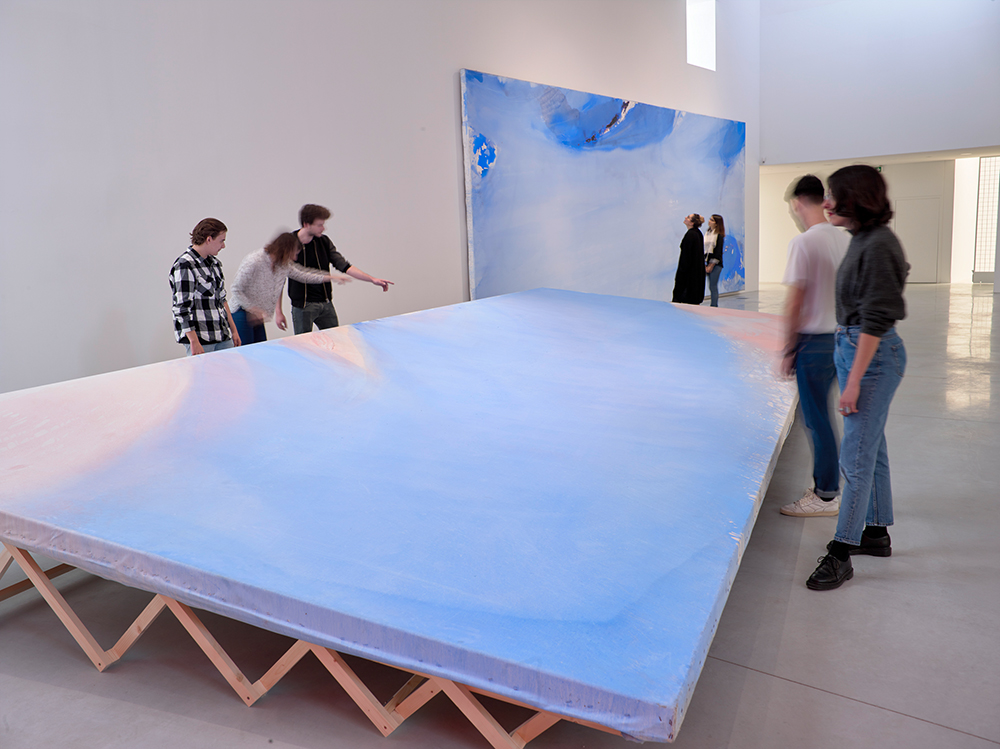
The work, assuming a spatial dimension, merits being hung in a specific way, enabling it to be comprehended from a variety of perspectives, comparable with that in which the artist perceived his canvases in the studio.
olivier debré
(1920 – 1999)
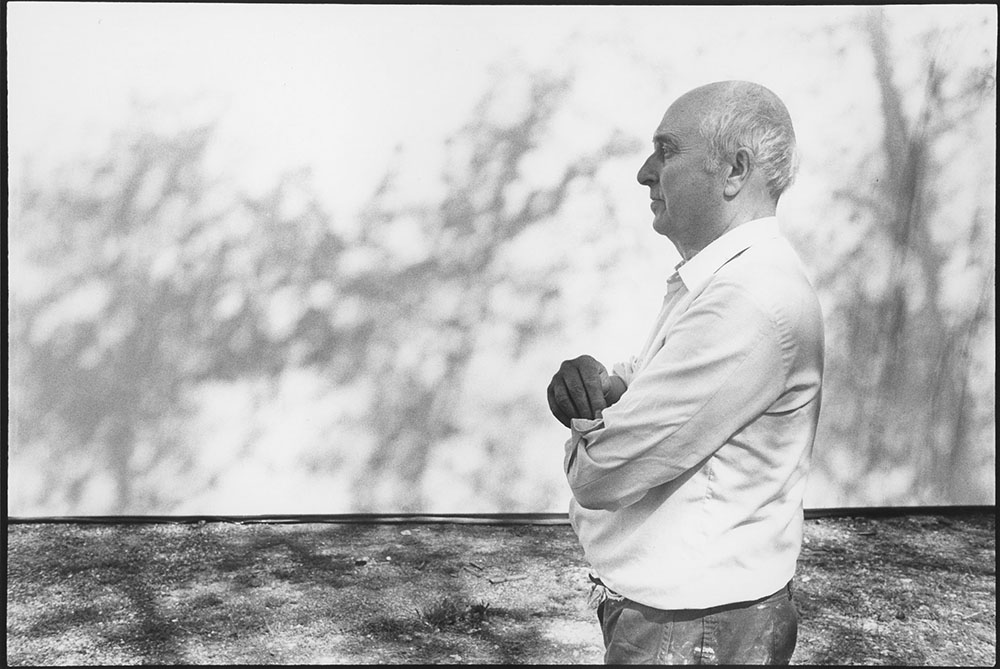
Olivier Debré was born in Paris into a family of doctors and artists. He began painting and drawing as a child, and then turned to a career in architecture. In 1938, he graduated from the Paris School of Fine Arts in the architecture section. However, he decided to devote himself to painting.
His pictorial expression, initially inspired by Impressionism, evolved towards more open compositions with large areas of colour, making Debré one of the exponents of gestural abstraction. Despite travelling extensively around the world, he often returned to paint near the Loire, at Vernou-sur-Brenne, near Tours, in the “Madères” estate where he had set up one of his studios.
Stripped of all anecdote, Olivier Debré’s painting is a painting of space and light. The titles he uses are the evocative expression of an emotion linked to a moment, a place and embodied by a chromatic atmosphere. In this way, we are very close to the landscape, and already in the landscape, whose limits and horizon have been pushed beyond the field of the painting. The viewer is thus truly at the centre of an immense detail.
Six monumental paintings in the exhibition encapsulate the essence of Olivier Debré’s work. They summarise a lifetime of visual experimentation focused on concrete expression of the intangible. The artist incorporates space and light going on to unleash them in the form of colourful layers filling the viewer’s space. Created as components of one and the same series in 1990-1991, they are reunited for a public exhibition for the first time at the cccod.
The title of the exhibition, drawing a symbolic link between Claude Monet’s Nymphéas (water lilies) and Debré’s large paintings, alludes to the entire history of 20th century abstraction. Monet’s later works were indeed considered by certain artists, Abstract Expressionists for example, the first illustrations of a form of abstraction in painting. ‘Olivier Debré’s Nymphéas’ does not intend to imply a direct influence of the Impressionist on the Loire valley artist, but instead highlights conceptual similarities between their respective creative processes.
The idea of an abstraction that draws its inspiration from nature, from the sensory world, has always been controversial. This paradox is however often highlighted regarding the work of Debré, who enjoyed immersing himself in the landscape, on the banks of the Loire for instance, to paint.
But if Debré is indeed a landscape painter, he recreates mental landscapes on the surface of the canvas: what could be more abstract?
These are not direct representations of the river, but interpretations of its truly visual fluidity, liquidity. In the face of these works, the gaze escapes, flourishes and wanders at the whim of the surface, becoming lost in the use of transparency and at times dry, at times wet subject. For Debré does not work with subject solely to be striking, he provides his colours with a tactile relief and captivating presence that reverberates well beyond the limits of the canvas.
The work, assuming a spatial dimension, merits being hung in a specific way, enabling it to be comprehended from a variety of perspectives, comparable with that in which the artist perceived his canvases in the studio.
Sorry, the comment form is closed at this time.