


walking on the light
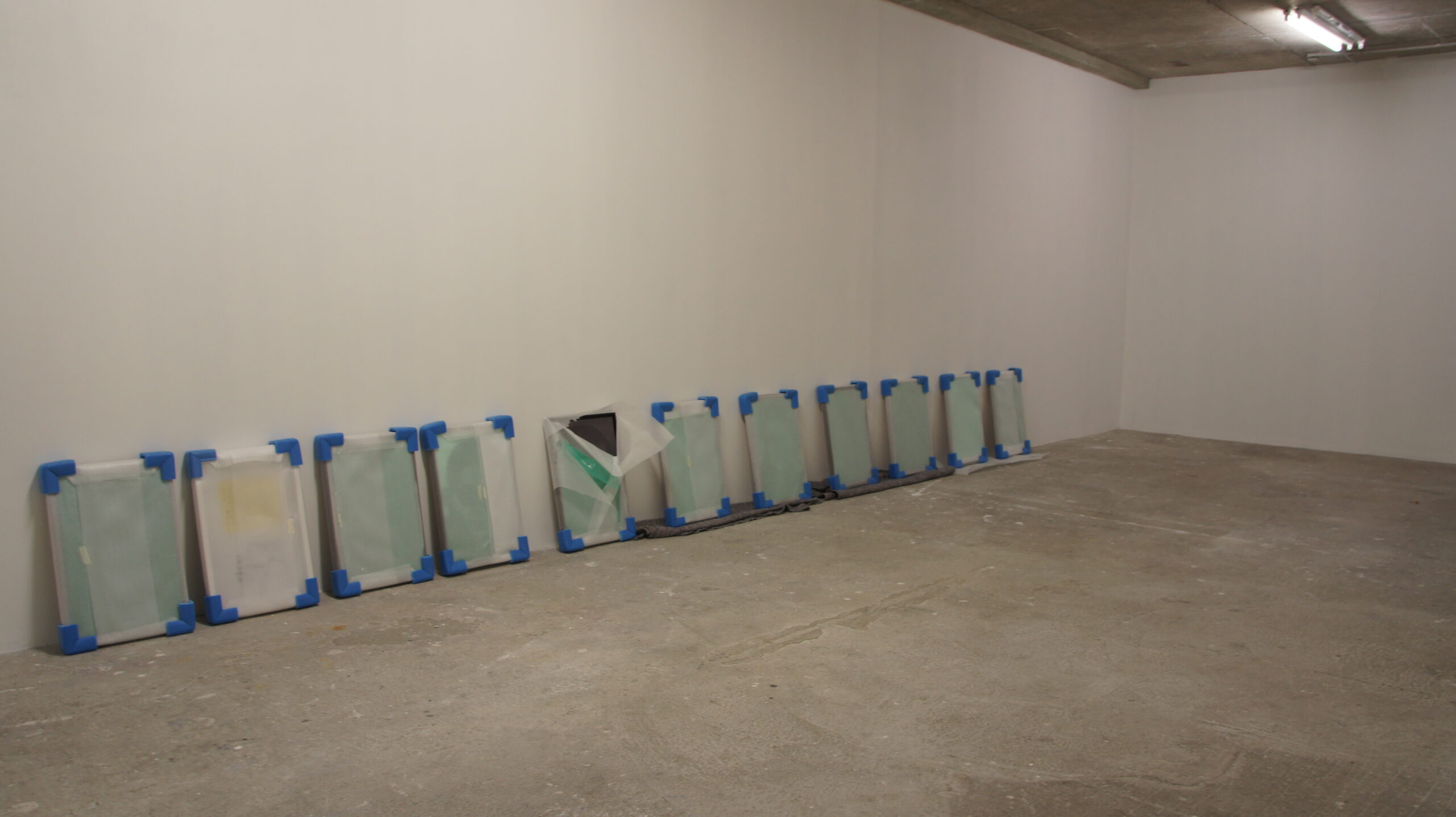
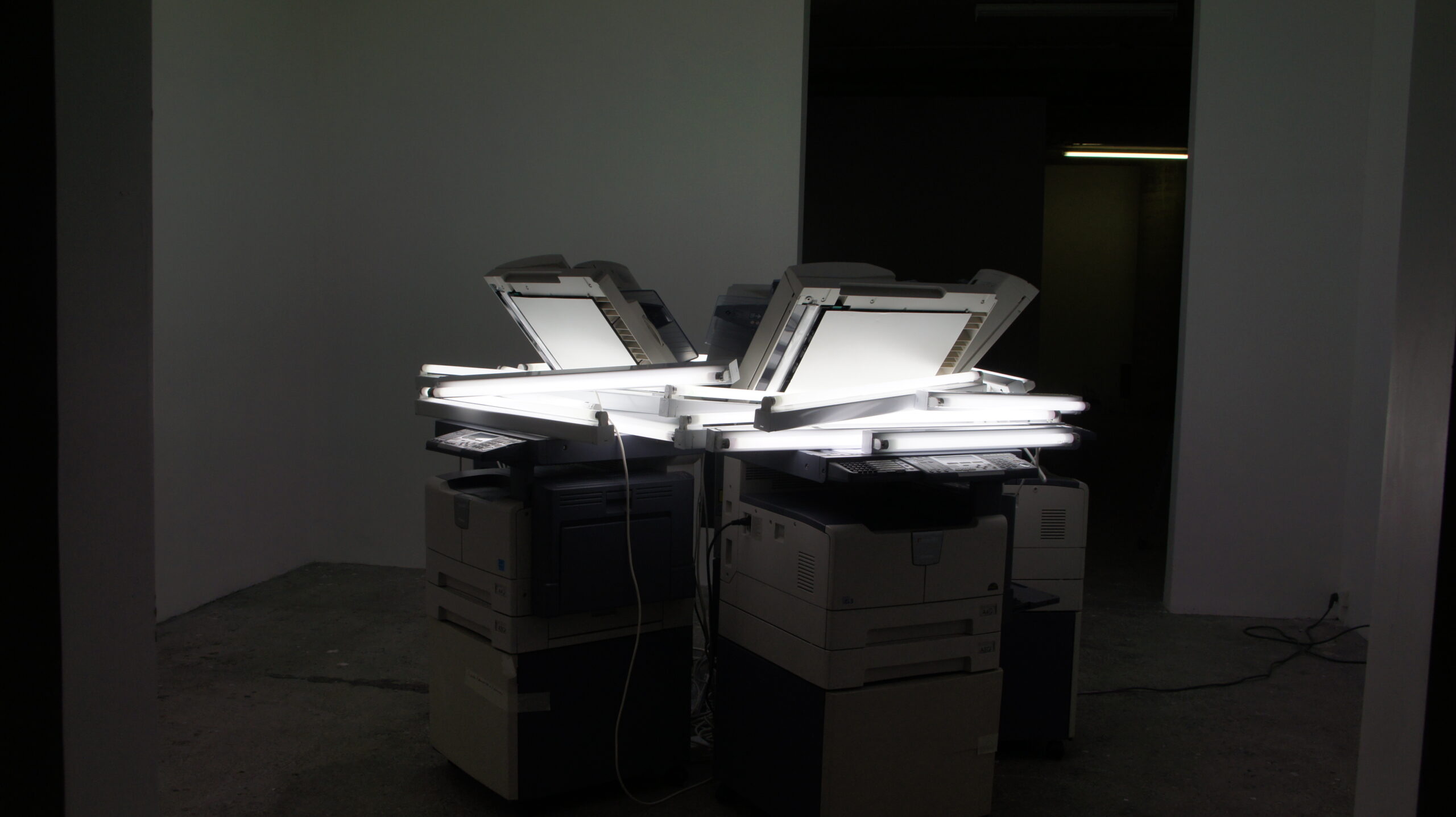


mounir fatmi presents his new solo exhibition “Walking on the Light” at the CCC. It brings together an important group of around fifteen recent works. Placing the question of otherness and the exploration of language at the forefront, the artist outlines a journey haunted by the presence of two writers: Salman Rushdie and John Howard Griffin. Two men of language whose lives were marked by the experience of deconstructing their identity and re-creating it through the figure of the Other.
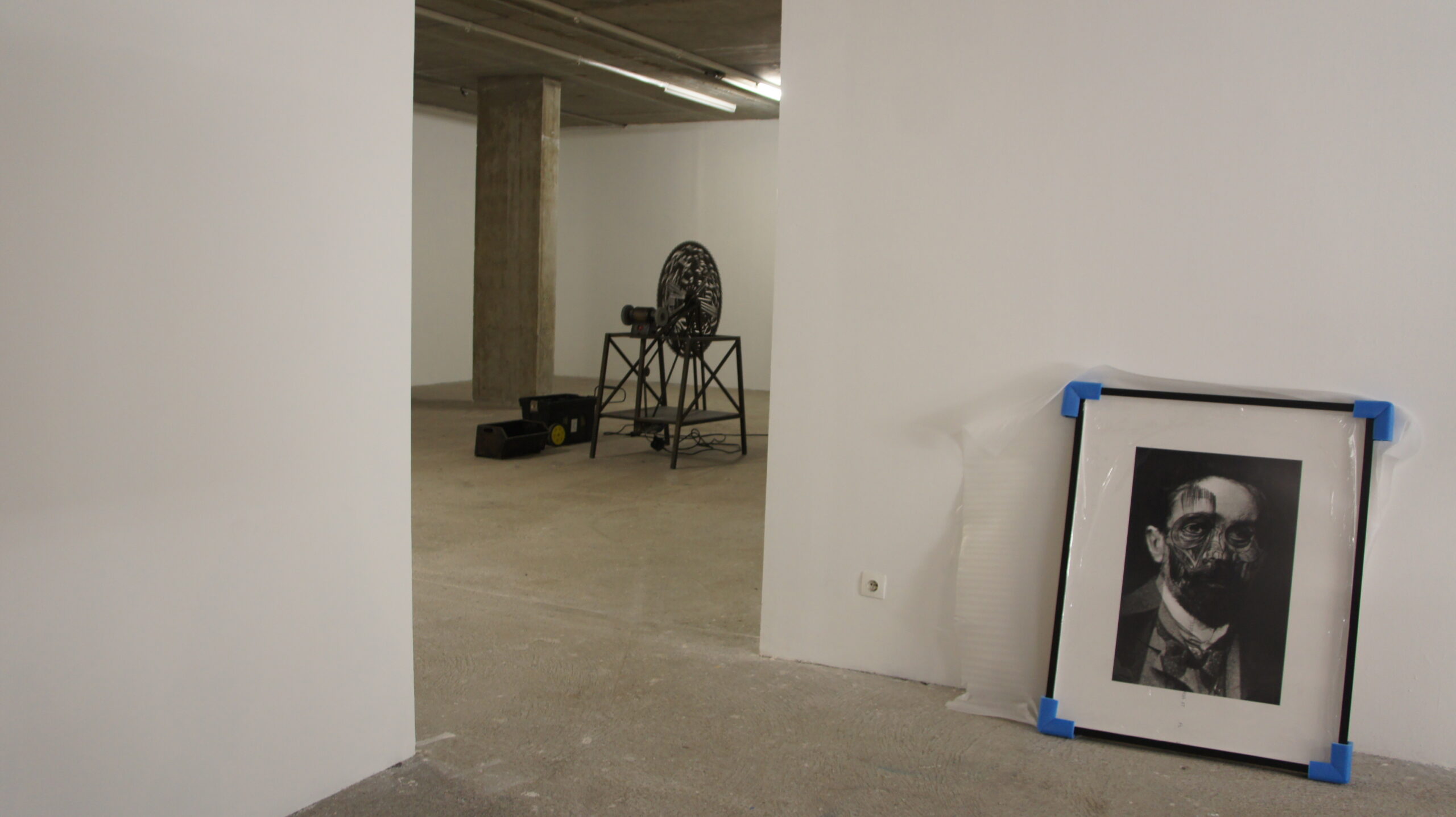
The photomontage “Who is Joseph Anton?” (2012) takes us on a journey in the footsteps of Salman Rushdie, through the alias he used to continue living and writing in forced clandestinity. A contraction of the names of two other writers, Joseph Conrad and Anton Chekov, the name Joseph Anton brings together three authors, three identities and three voices, all merging to create a new portrait: that of the fugitive. The features of the threatened writer reappear in the video “Sleep Al Naim” (2005-2012), depicting him in the ambivalence of a quiet, untroubled sleep, a state of mixed vulnerability and strength.
Several of the works in the exhibition take us back to the experiments carried out in the 1960s by white writer John Howard Griffin to blend in with the black American community and share in its experience at a time of racial discrimination. The author did not hesitate to change the very colour of his skin irreversibly. His writings bear witness to this plunge into the heart of the experience of the Other, a plunge into the blackness of the image from which he would never recover. John Howard Griffin studied medicine at the Faculty of Medicine in Tours, then became an intern at the Tours psychiatric hospital under the direction of Dr Pierre Fromenty, where he conducted experiments using Gregorian music on criminally ill patients. Enlisted in the army during the Second World War, he received shrapnel in the brain and went blind. In 1957, he miraculously recovered his sight.
Crossing these two literary evocations, mounir fatmi presents a dozen works, some of which, like “Mehr Licht”, are emblematic of his work. Along the way, the exhibition explores the violence of history and civilisation, expressed through the written word and different languages, religious, political and literary.
Extract from the press release – 2014
mounir fatmi
The artist was born in 1970 in Tanger; he now lives and works between Morocco and France.
exposition au CCC : « Walking on the light » en 2014.
His work has benefitted from international recognition since the 2000’s. His multimedia work includes installations, sculptures, video, drawing, painting, and writing. caught between the western and eastern cultures, the artist developed a critical and aesthetic approach to art that goes against political, religious, or social dogmas. He challenges our contemporary world through the portrayal of its ambiguities, doubts, violence and paradoxes, beyond established codes and representations. His work, which takes the form of an immense network, involves many fields of knowledge, from science to philosophy and politics. The spectator is encouraged to read through the lines of the world from different perspectives, and refuse to be blinded by conventions.
Mounir Fatmi’s work has been presented in numerous personal exhibitions at the Migros Museum in Gegenarskunst, the Musée Picasso, La Guerre et la Paix, the FRAC Alsace, the contemporary art centre le Parvis, the Fondazione Collegio San Carlo… He also participated in numerous collective exhibitions at the Centre Georges Pompidou, Paris, the Brooklyn Museum, New York, the Museum Kunst Palast, Düsseldorf, the Mori Art Museum, Tokyo, the Museum on the Seam, Jerusalem, Moscow the Museum of modern art, Mathaf, the Arab Museum of Modern Art, and the Hayward Gallery, London.
His installations have been selected from within numerous biennales, the 52nd and 54th Biennale of Venise, the 8th Biennale of Sharjah, the 5th and 7th Biennale of Dakar, the 2nd Biennale of Seville, the 5th Biennale of Gwanju, the 10th Biennale of Lyon.
Exhibition at the CCC: “Walking on the light” in 2014.
mounir fatmi presents his new solo exhibition “Walking on the Light” at the CCC. It brings together an important group of around fifteen recent works. Placing the question of otherness and the exploration of language at the forefront, the artist outlines a journey haunted by the presence of two writers: Salman Rushdie and John Howard Griffin. Two men of language whose lives were marked by the experience of deconstructing their identity and re-creating it through the figure of the Other.
The photomontage “Who is Joseph Anton?” (2012) takes us on a journey in the footsteps of Salman Rushdie, through the alias he used to continue living and writing in forced clandestinity. A contraction of the names of two other writers, Joseph Conrad and Anton Chekov, the name Joseph Anton brings together three authors, three identities and three voices, all merging to create a new portrait: that of the fugitive. The features of the threatened writer reappear in the video “Sleep Al Naim” (2005-2012), depicting him in the ambivalence of a quiet, untroubled sleep, a state of mixed vulnerability and strength.
Several of the works in the exhibition take us back to the experiments carried out in the 1960s by white writer John Howard Griffin to blend in with the black American community and share in its experience at a time of racial discrimination. The author did not hesitate to change the very colour of his skin irreversibly. His writings bear witness to this plunge into the heart of the experience of the Other, a plunge into the blackness of the image from which he would never recover. John Howard Griffin studied medicine at the Faculty of Medicine in Tours, then became an intern at the Tours psychiatric hospital under the direction of Dr Pierre Fromenty, where he conducted experiments using Gregorian music on criminally ill patients. Enlisted in the army during the Second World War, he received shrapnel in the brain and went blind. In 1957, he miraculously recovered his sight.
Crossing these two literary evocations, mounir fatmi presents a dozen works, some of which, like “Mehr Licht”, are emblematic of his work. Along the way, the exhibition explores the violence of history and civilisation, expressed through the written word and different languages, religious, political and literary.
Extract from the press release – 2014
Sorry, the comment form is closed at this time.