


jacques halbert
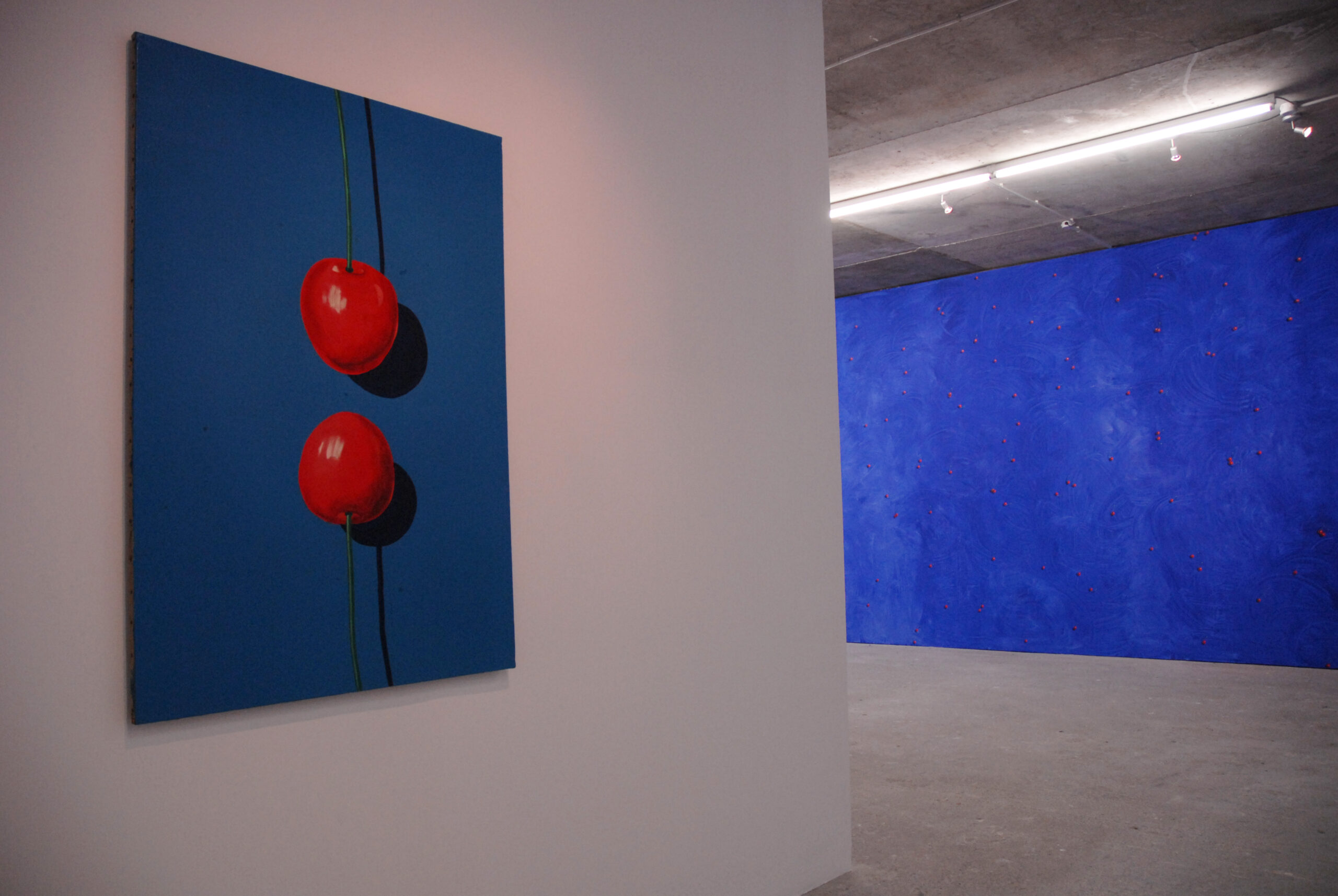
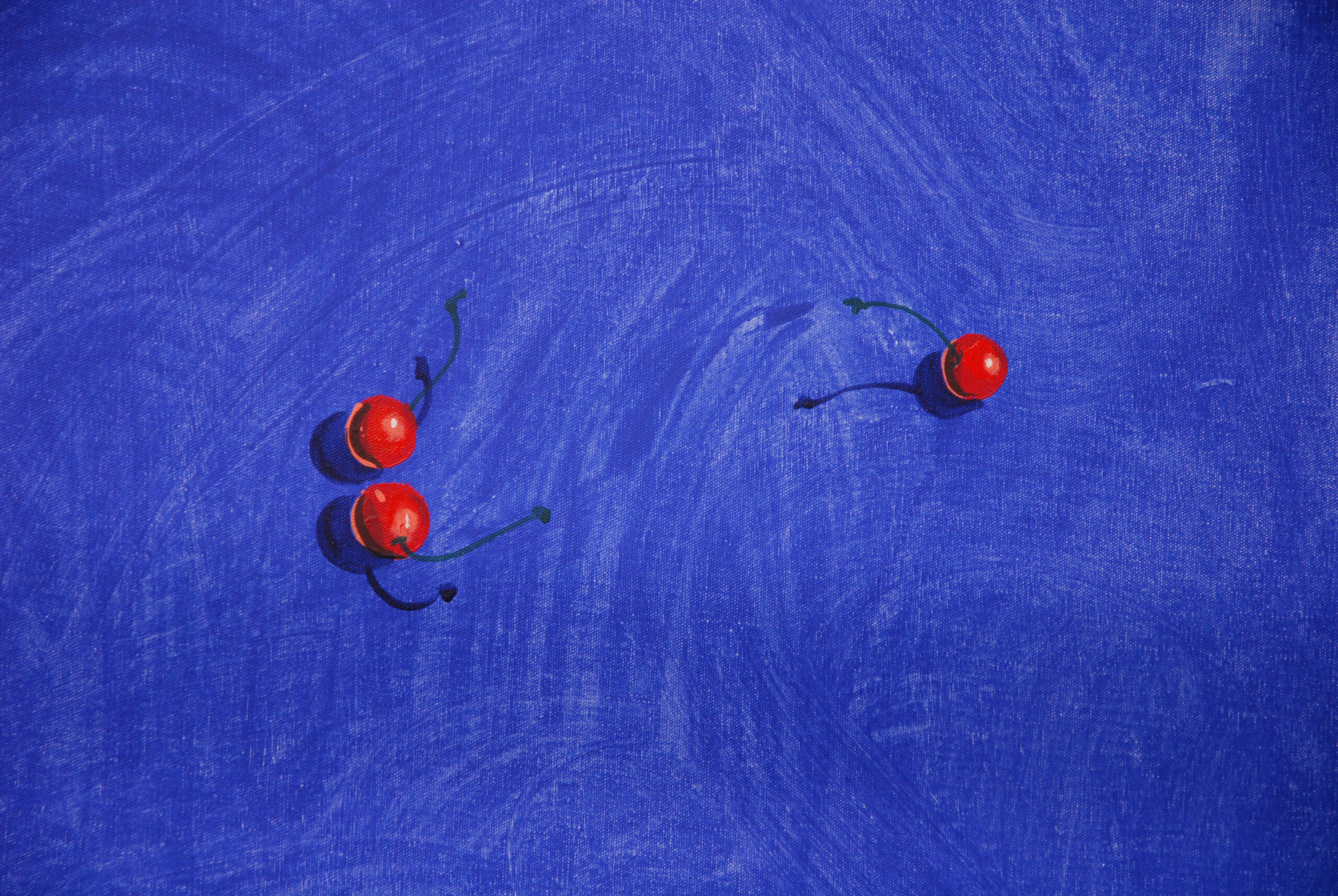
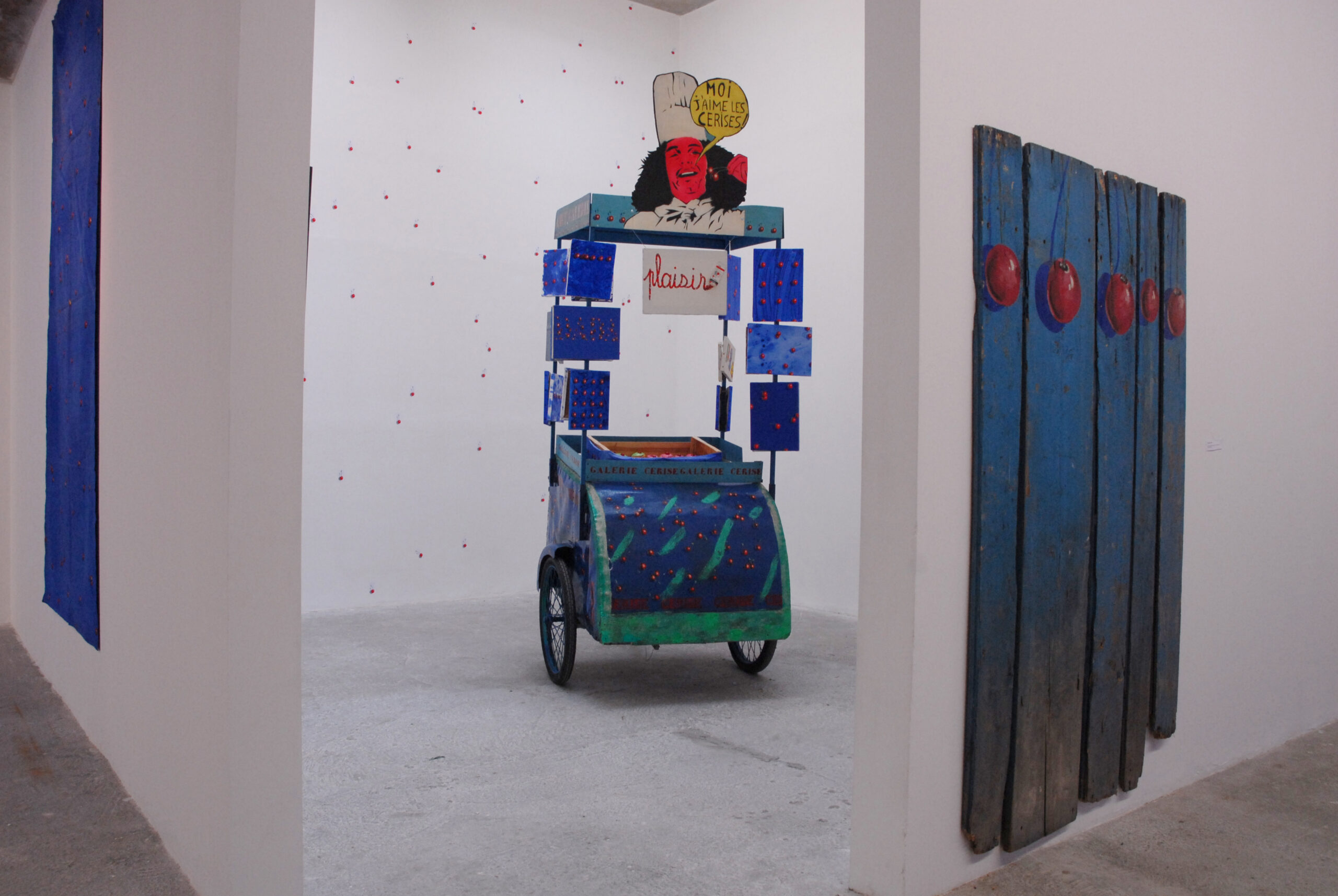
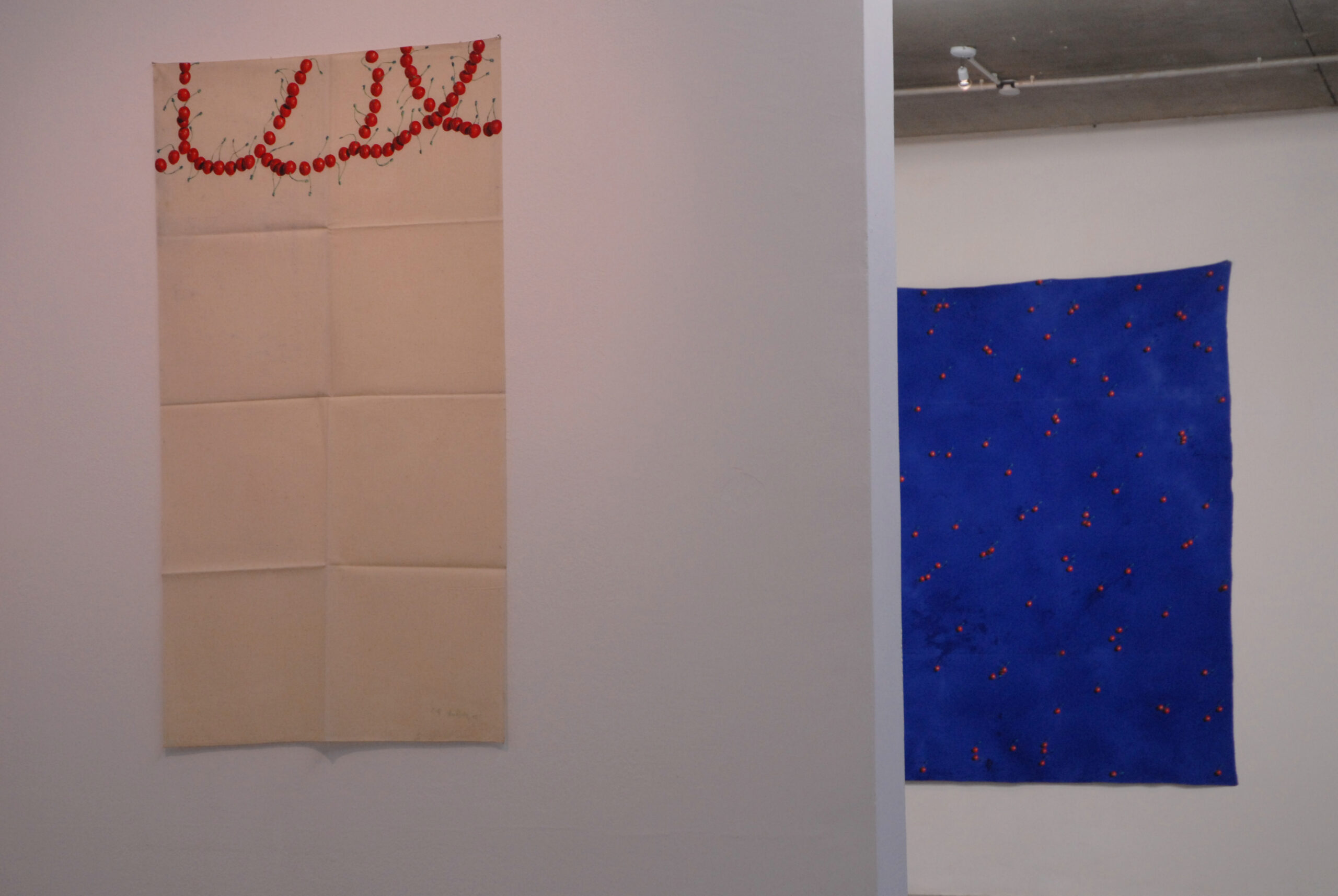
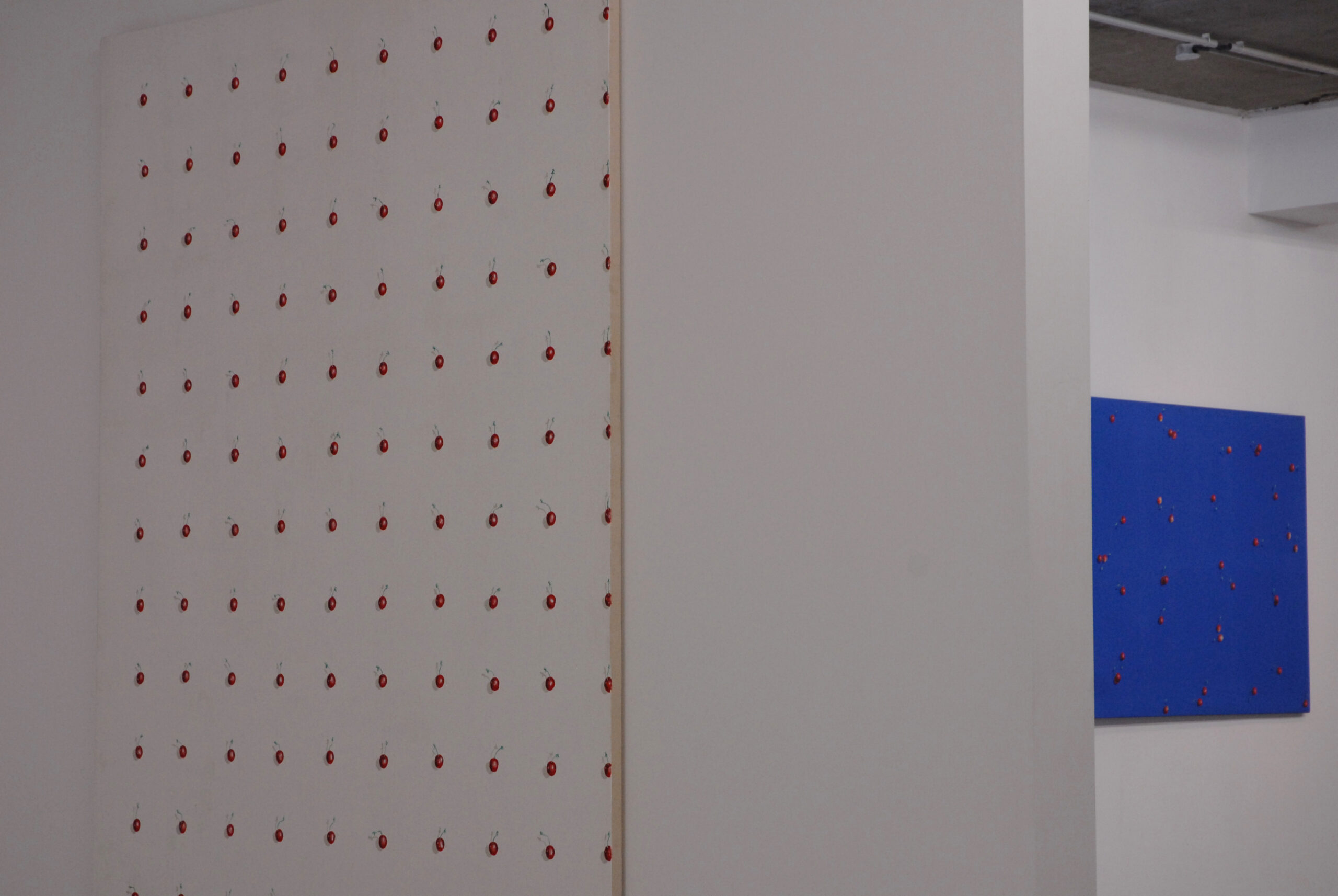
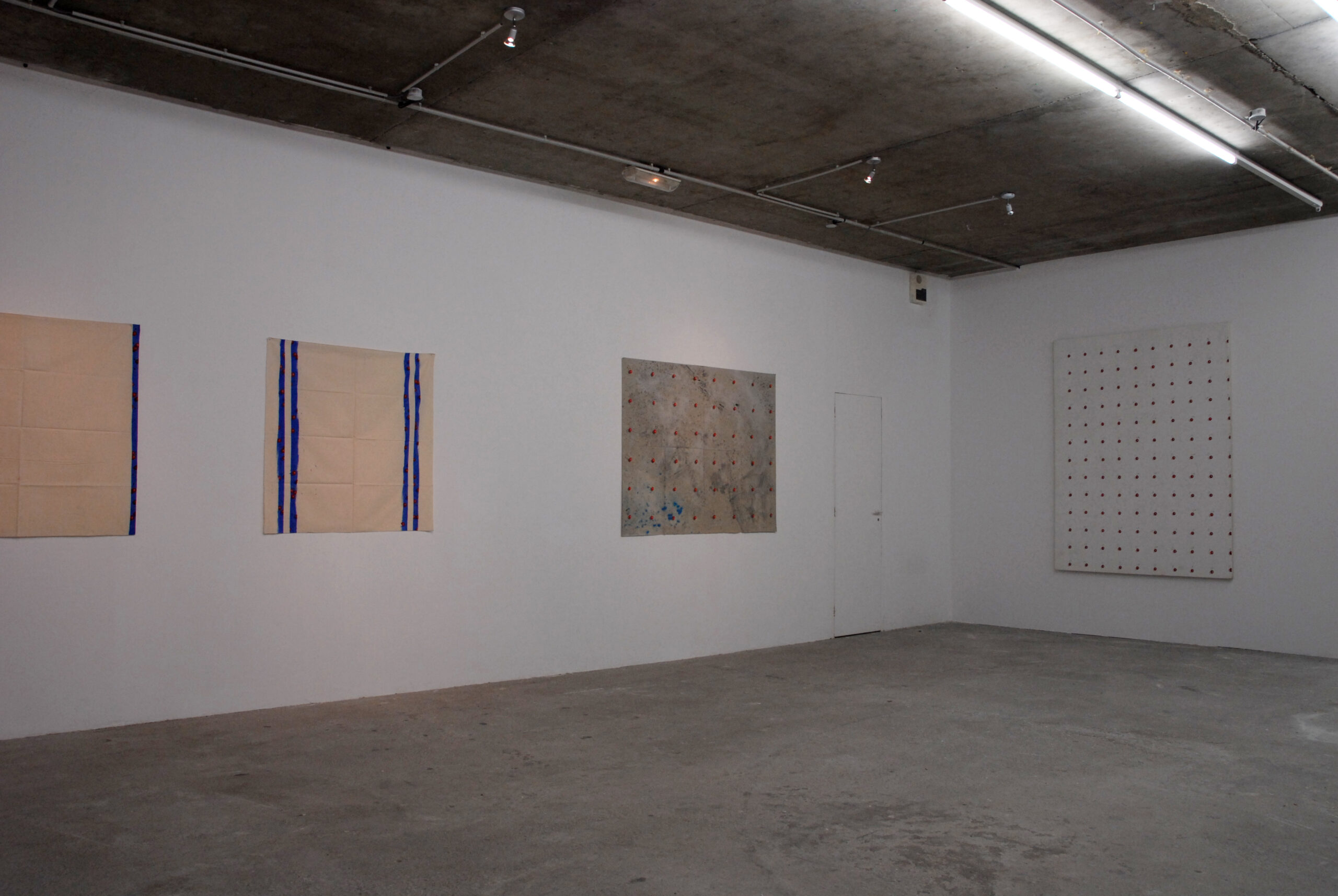


This first «retrospective» of the cherries of Jacques Halbert intends to make readable the astonishing continuity of this work. From the first canvas of 1975 to the new productions in monumental formats, this exhibition brings to light the infinite variations that are expressed in these tireless repetitions. In addition to the strictly pictorial qualities and concerns of the work of Jacques Halbert, it is here to question the astonishing resistance of this subject to exhaustion, as if each new cherry placed on the canvas renewed the very essence of the desire to paint.
Appearing in the 70s, the cherry was a provocative reaction to the Support/Surface movement that the artist, still a student, felt was terribly austere. The incongruous, almost fleshly irruption of the fruit on the blue canvases sign a reappropriation of his practice in accordance with his deep personality: that of an epicurean artist, worthy heir to the Dada exuberances. The cherry quickly leads him to the field of performance performance which is an important part of his practice: the artist made himself known by surveying with his three-wheeler the Parisian vernissages, selling cakes and cherry paintings.
The art of Jacques Halbert is nourished at all levels of the great history of painting. His «cherry» works are surprisingly situated at the confluence of two divergent states of mind of the avant-gardes that have since the 1970s profoundly redefined the artistic landscape. In some respects, his work recalls some radical movements, which pushed painting to its most extreme limits, such as BMPT with Daniel Buren or Niele Toroni. But by choosing the cherry, Jacques Halbert bypasses this radical trend by integrating humor and pop vitality, which also place him in the filiation of the Fluxus spirit and all artistic attempts to connect art and life.
Excerpt from Press Release – 2007
jacques halbert
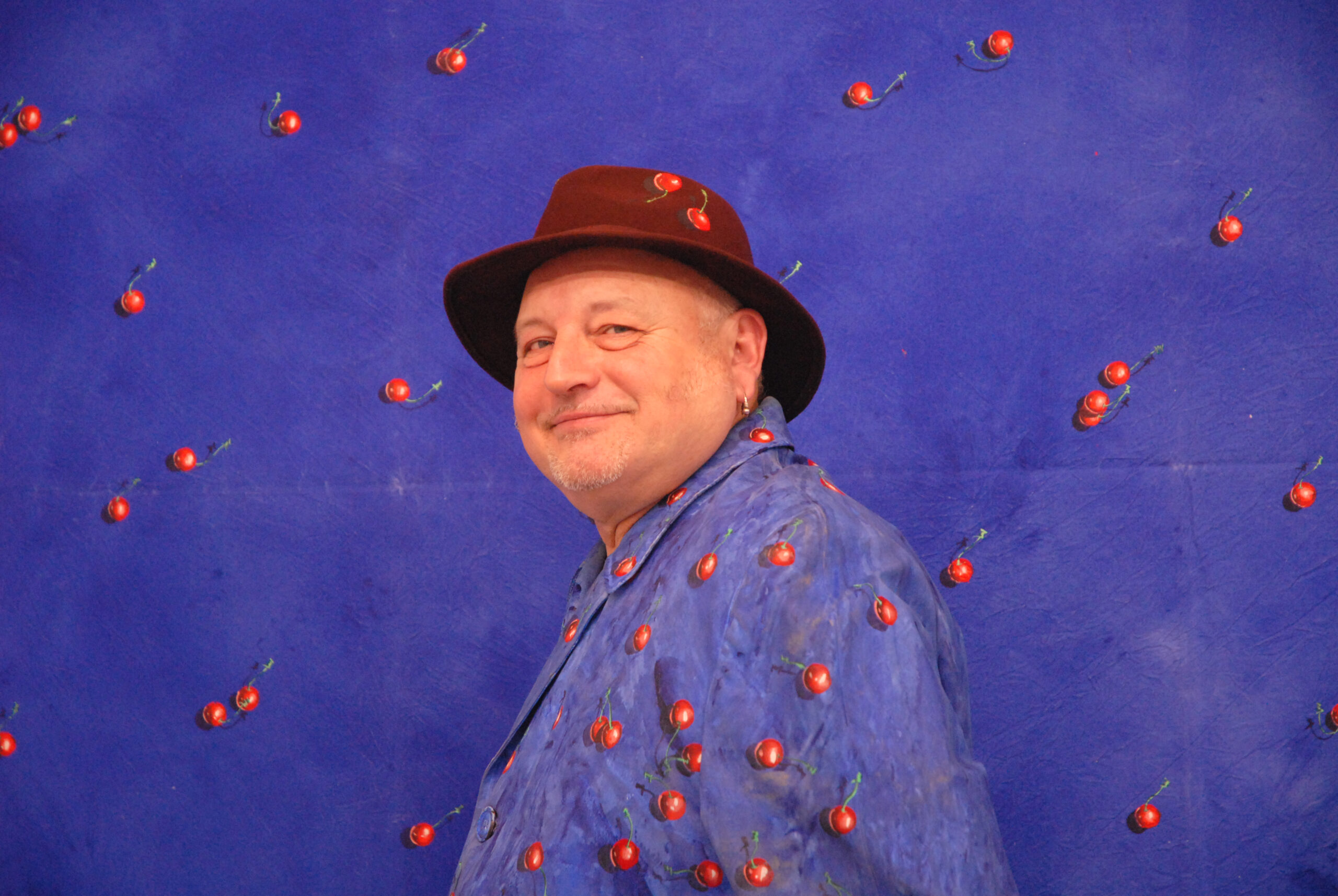
The artist was born in 1955 in Bourgueil (Touraine); he now lives and works in Brussels.
Jacques Halbert painted his first cherry in 1975. Since then, the fruit has been regularly featured in his prolific work, bringing rhythm and cadence to the blue surface of his canvases.
The cherry motive, claimed as part of an artistic statement, accompanied the artist’s journey, as he acquired a taste for Fluxus and Eat Art (from paintings to performances, and from France to the US). However, no other medium has ever surpassed the medium of painting, to which Jacques Halbert shows a deep attachment. Similarly, although he often has shown an interest in other culinary subjects (peas, potatoes or gratin dauphinois), the cherry remains the only subject that has withstood the test of time.
From the “Jacques Halbert” exhibition press release (2006)
This first «retrospective» of the cherries of Jacques Halbert intends to make readable the astonishing continuity of this work. From the first canvas of 1975 to the new productions in monumental formats, this exhibition brings to light the infinite variations that are expressed in these tireless repetitions. In addition to the strictly pictorial qualities and concerns of the work of Jacques Halbert, it is here to question the astonishing resistance of this subject to exhaustion, as if each new cherry placed on the canvas renewed the very essence of the desire to paint.
Appearing in the 70s, the cherry was a provocative reaction to the Support/Surface movement that the artist, still a student, felt was terribly austere. The incongruous, almost fleshly irruption of the fruit on the blue canvases sign a reappropriation of his practice in accordance with his deep personality: that of an epicurean artist, worthy heir to the Dada exuberances. The cherry quickly leads him to the field of performance performance which is an important part of his practice: the artist made himself known by surveying with his three-wheeler the Parisian vernissages, selling cakes and cherry paintings.
The art of Jacques Halbert is nourished at all levels of the great history of painting. His «cherry» works are surprisingly situated at the confluence of two divergent states of mind of the avant-gardes that have since the 1970s profoundly redefined the artistic landscape. In some respects, his work recalls some radical movements, which pushed painting to its most extreme limits, such as BMPT with Daniel Buren or Niele Toroni. But by choosing the cherry, Jacques Halbert bypasses this radical trend by integrating humor and pop vitality, which also place him in the filiation of the Fluxus spirit and all artistic attempts to connect art and life.
Excerpt from Press Release – 2007
Sorry, the comment form is closed at this time.