


chambre d’huile
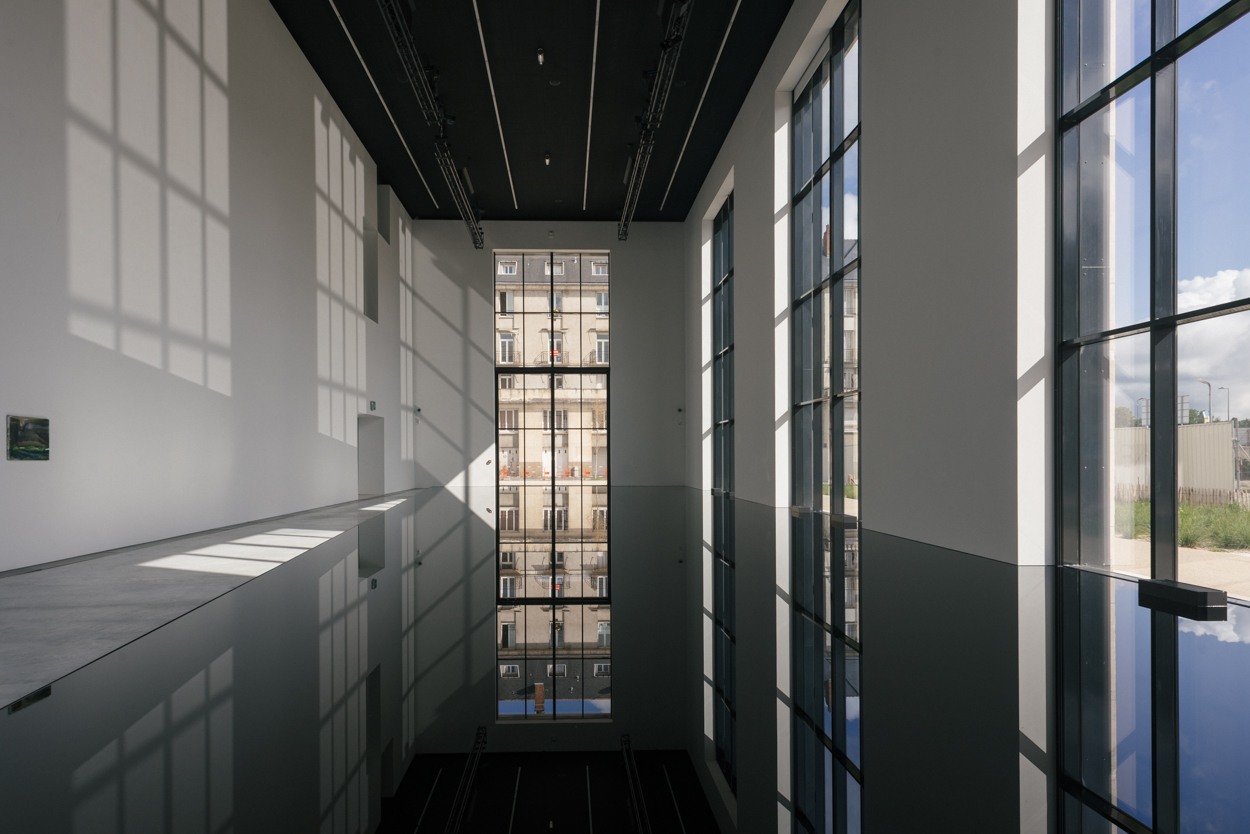
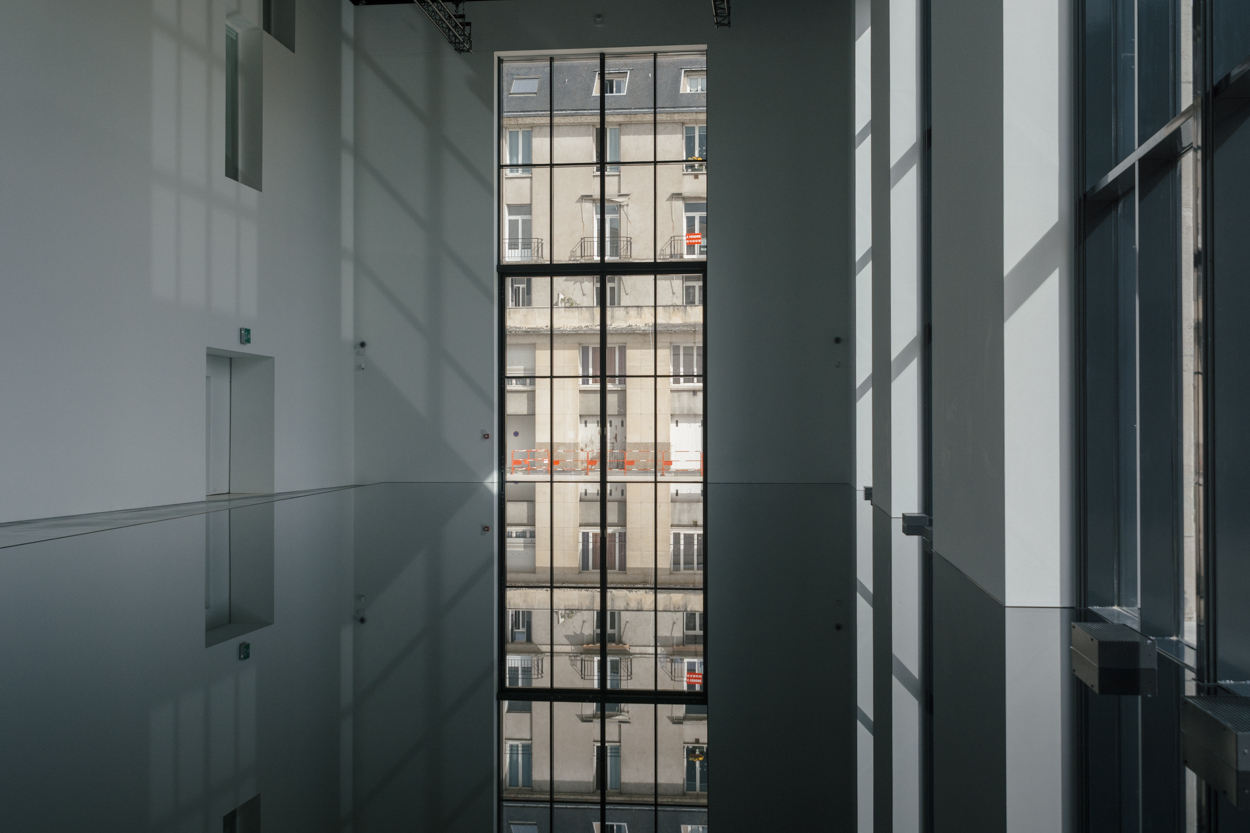


To mark the opening of CCC OD, Per Barclay is creating one of the largest “Oil Chambers” ever presented in an exhibition context in the nave of the art centre.
It is extremely rare to experience this kind of emblematic installation in the Norwegian artist’s work, since “Oil Chambers” are not necessarily intended to be exhibited. In fact, they are most often conceived as shooting devices intended solely to create photographic images.
They reveal details that the eye alone cannot see. For this inaugural exhibition, Per Barclay’s installation allows the monumental architecture of the nave to be revealed for the first time with amplified intensity. The installation exacerbates two essential characteristics of this large space at CCC OD: its exceptional height of 11 metres and the transparency of its four large windows opening onto the city.
Per Barclay’s work is highly paradoxical in that, at first glance, the work on the floor does not seem to take advantage of the impressive volume of the space, opting instead for emptiness. However, this volume reappears in all its dimensions as soon as you approach the reflection, which opens up an abyss made all the more vertiginous by the particularly high ceilings in the nave.
Facing the “Chambre d’huile” means that reality and its image coexist in the same place. Despite the clear demarcation separating the two, the confusion remains, and our perception is constantly shifting. It’s also difficult to determine the true nature of what is in front of us: liquid or solid, flat surface or unfathomable abyss?
Per Barclay’s installation in the nave questions more than ever these ambiguities that affect perception. It also makes particular use of the hybrid status of these installations, which are part image and part sculpture, belonging to both fields at the same time. Leaning against the architecture on two of its sides, it almost merges with it to produce the illusion of a pure image devoid of any materiality. But on its other two sides it is also a sculpture, a physical object cutting through the space. In this protruding part, the threshold is very slightly raised, just enough to create an effect of detachment that designates the basin as a relief even as it opens onto the void.
per barclay
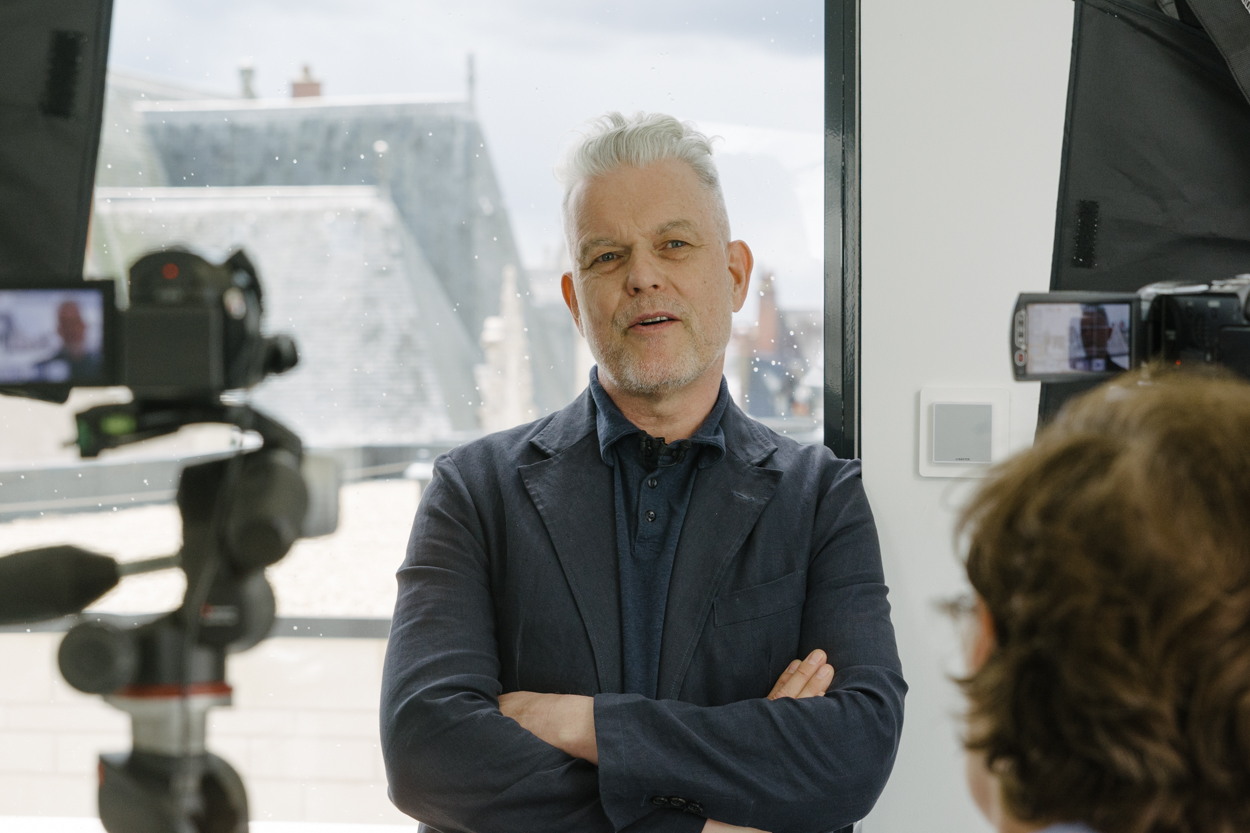
Born in Oslo in 1955. He lives and works in Turin. After studying art history in Bergen, Norway—where he began exhibiting his works as early as 1984—the artist went on to study art in Italy; from then on, his work was strongly influenced by Arte Povera. He gained international recognition during the 1990s.
His multifaceted body of work combines photography, sculpture, and installation, centered on concerns related to space. Balance and tension are essential terms for approaching the work of this artist, who says he seeks to depict inner tensions and to transcend them through a formal perfection that allows him to reach a form of equilibrium. Even if the body is often absent or excluded, it always remains a major element of his works.
To mark the opening of CCC OD, Per Barclay is creating one of the largest “Oil Chambers” ever presented in an exhibition context in the nave of the art centre.
It is extremely rare to experience this kind of emblematic installation in the Norwegian artist’s work, since “Oil Chambers” are not necessarily intended to be exhibited. In fact, they are most often conceived as shooting devices intended solely to create photographic images.
They reveal details that the eye alone cannot see. For this inaugural exhibition, Per Barclay’s installation allows the monumental architecture of the nave to be revealed for the first time with amplified intensity. The installation exacerbates two essential characteristics of this large space at CCC OD: its exceptional height of 11 metres and the transparency of its four large windows opening onto the city.
Per Barclay’s work is highly paradoxical in that, at first glance, the work on the floor does not seem to take advantage of the impressive volume of the space, opting instead for emptiness. However, this volume reappears in all its dimensions as soon as you approach the reflection, which opens up an abyss made all the more vertiginous by the particularly high ceilings in the nave.
Facing the “Chambre d’huile” means that reality and its image coexist in the same place. Despite the clear demarcation separating the two, the confusion remains, and our perception is constantly shifting. It’s also difficult to determine the true nature of what is in front of us: liquid or solid, flat surface or unfathomable abyss?
Per Barclay’s installation in the nave questions more than ever these ambiguities that affect perception. It also makes particular use of the hybrid status of these installations, which are part image and part sculpture, belonging to both fields at the same time. Leaning against the architecture on two of its sides, it almost merges with it to produce the illusion of a pure image devoid of any materiality. But on its other two sides it is also a sculpture, a physical object cutting through the space. In this protruding part, the threshold is very slightly raised, just enough to create an effect of detachment that designates the basin as a relief even as it opens onto the void.
Sorry, the comment form is closed at this time.