


the resting thought
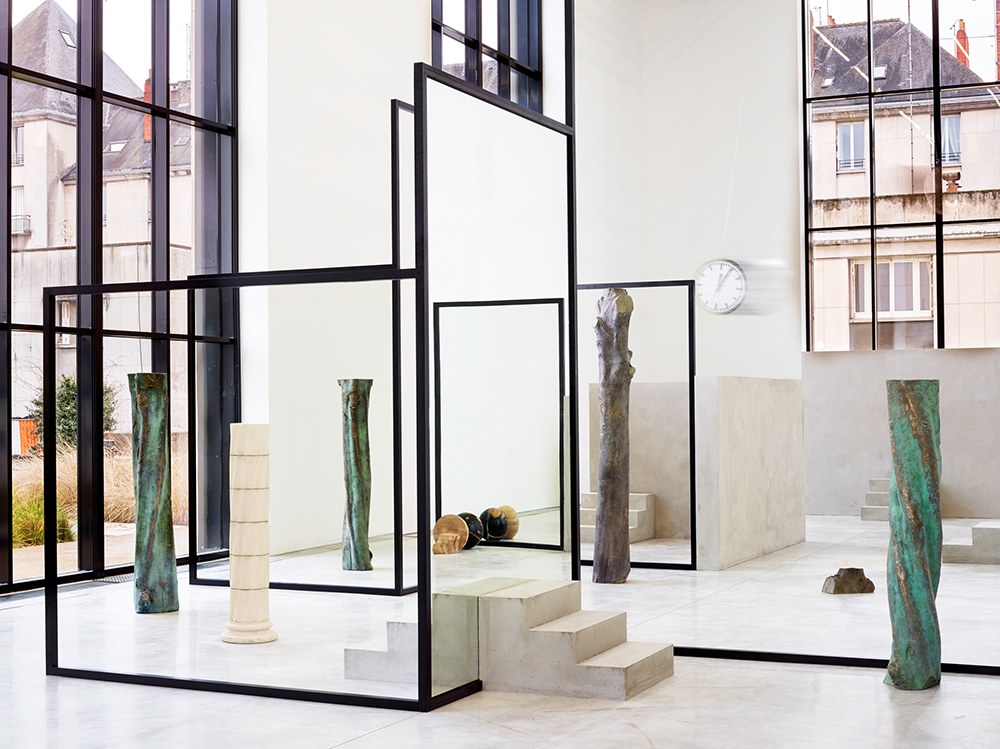
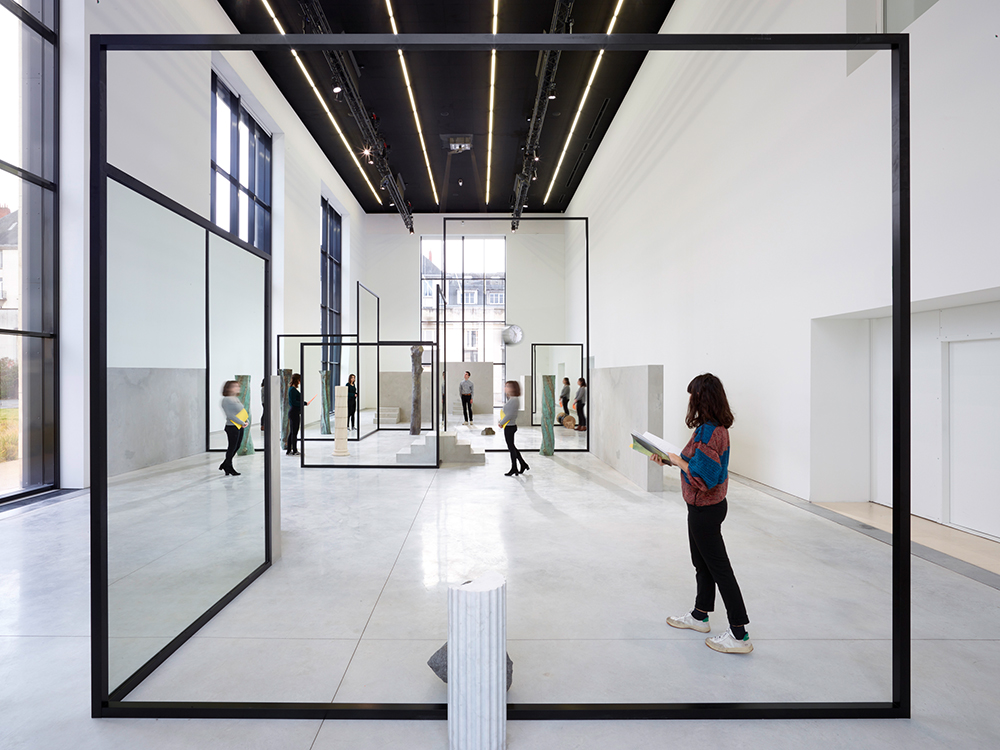
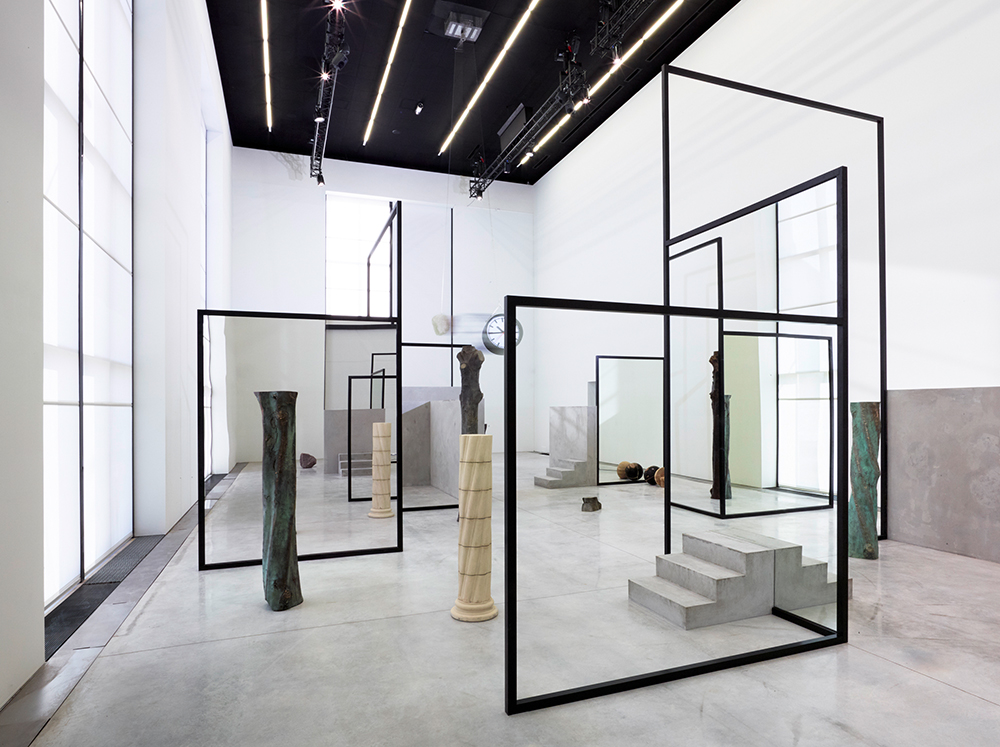


For her first solo institutional exhibition in France, Alicja Kwade fills the ccc od with a brand new work of art. Alicja Kwade’s sculptural work has demonstrated unparalleled development in terms of form over the course of several years culminating in this monumental piece matching the scale of the art centre nave.
Alicja Kwade exhibited the work WeltenLinie at the Venice Biennale in 2017, initiating her unique exploration of space, how it is perceived and their ubiquitous relativity. The artist, prominent on the international art scene, has since created other works enabling these concepts to be reinterpreted in a range of contexts and formats. The artist draws on and integrates these experiences for this new work at the ccc od.
The title of this new exhibition, which could be translated as “la pensée au repos”, invites us to pause for a moment. Taking the form of a labyrinth, Alicja Kwade transports us not only into an architectural space, but also into a psychic dimension relating to the path of thought.
The artist questions reality by highlighting the established human systems that enable us to apprehend it, such as the principles of measuring time and space. Anchored in our minds as self-evident, these theories are paradoxically no more than physical or philosophical interpretations. In order to reveal them more clearly, Alicja Kwade explores materials and uses objects from everyday life, subjecting them to multiple modifications in order to question our perception. As visitors move through the installation, the images move and the forms of the sculpture evolve, like a sequence. This poetic proposition introduces a complex set of reflections on the world around us, multiplying our points of view and engaging our bodies.
Alicja Kwade’s exhibition is organised with the support of kamel mennour, Paris/London, as part of the “Viva Leonardo da Vinci ! 500 ans de Renaissance(s]” event.
alicja kwade
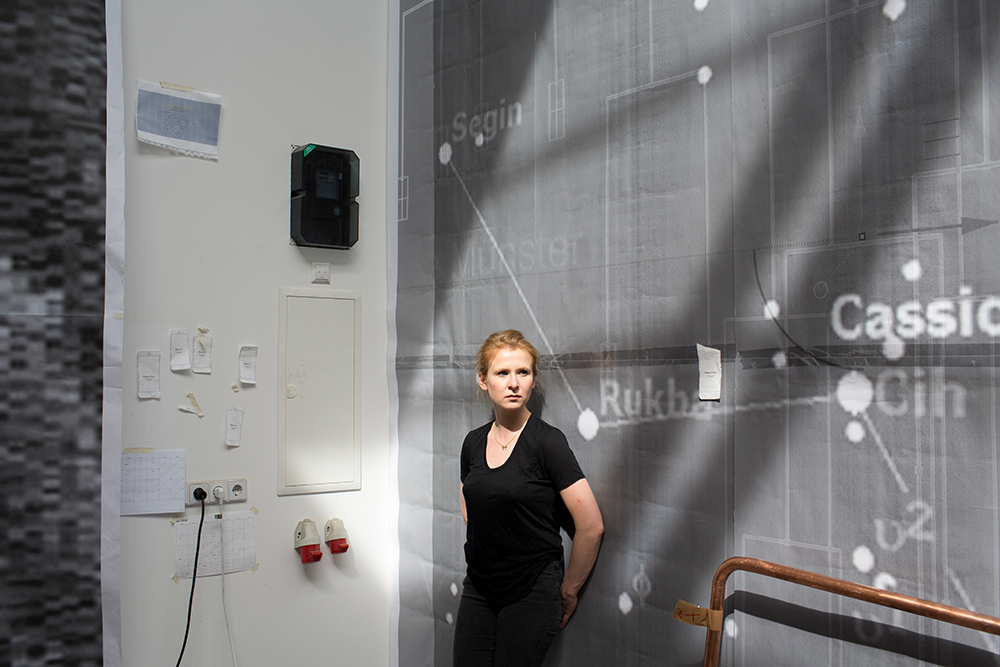
The artist was born in 1979 in Katowice, Poland.
She now lives and works in Berlin.
In her sculptural work, Alicja Kwade explores the limits of material; she makes use of everyday objects, but also raw material such as glass, wood, or copper, subject to multiple modifications in order to question our perception.
By playing with these materials and the established systems of worth, objects, and their perception, Alicja Kwade’s work explores the notions of time and space. The first work that truly initiated her singular research on space and perception, WeltenLinie, was presented at her latest participation in the Venice Biennial.
Alicja Kwade has since developed many works that have allowed her to replay these notions in various contexts and formats. All these experiences were mobilised and synthesised for the monumental piece that is now exhibited at the CCC OD.
Extrait du dossier de presse de l’exposition “The Resting thought” (2019) Avec le soutien de Kamel Mennour, Paris/London
For her first solo institutional exhibition in France, Alicja Kwade fills the ccc od with a brand new work of art. Alicja Kwade’s sculptural work has demonstrated unparalleled development in terms of form over the course of several years culminating in this monumental piece matching the scale of the art centre nave.
Alicja Kwade exhibited the work WeltenLinie at the Venice Biennale in 2017, initiating her unique exploration of space, how it is perceived and their ubiquitous relativity. The artist, prominent on the international art scene, has since created other works enabling these concepts to be reinterpreted in a range of contexts and formats. The artist draws on and integrates these experiences for this new work at the ccc od.
The title of this new exhibition, which could be translated as “la pensée au repos”, invites us to pause for a moment. Taking the form of a labyrinth, Alicja Kwade transports us not only into an architectural space, but also into a psychic dimension relating to the path of thought.
The artist questions reality by highlighting the established human systems that enable us to apprehend it, such as the principles of measuring time and space. Anchored in our minds as self-evident, these theories are paradoxically no more than physical or philosophical interpretations. In order to reveal them more clearly, Alicja Kwade explores materials and uses objects from everyday life, subjecting them to multiple modifications in order to question our perception. As visitors move through the installation, the images move and the forms of the sculpture evolve, like a sequence. This poetic proposition introduces a complex set of reflections on the world around us, multiplying our points of view and engaging our bodies.
Alicja Kwade’s exhibition is organised with the support of kamel mennour, Paris/London, as part of the “Viva Leonardo da Vinci ! 500 ans de Renaissance(s]” event.
Sorry, the comment form is closed at this time.