


variables d’épanouissement
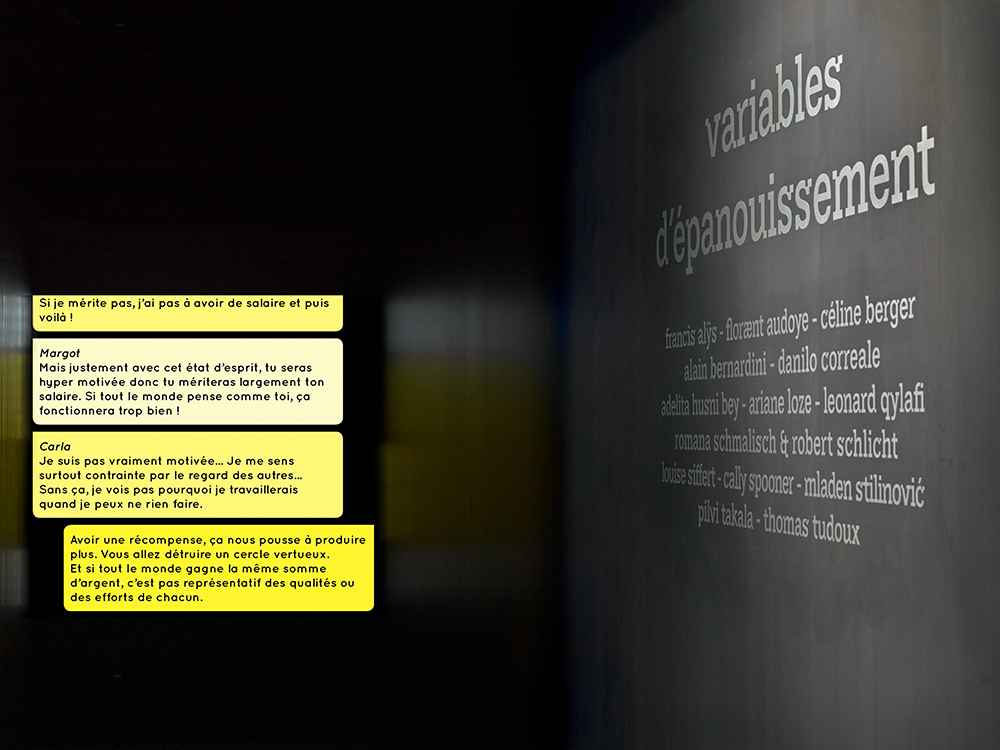
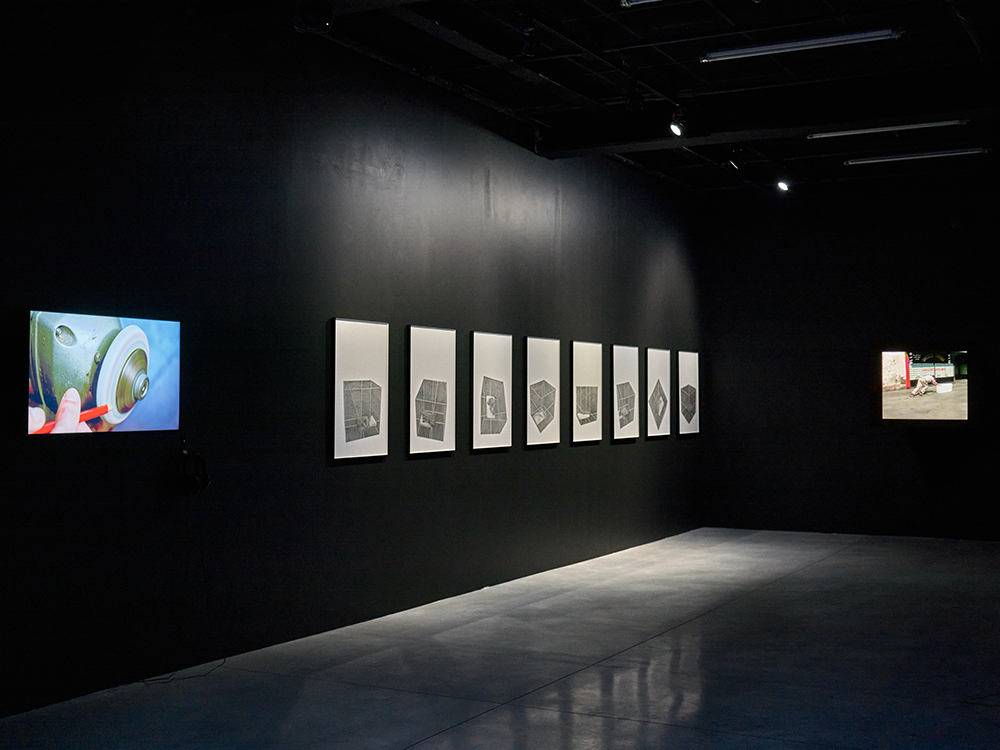
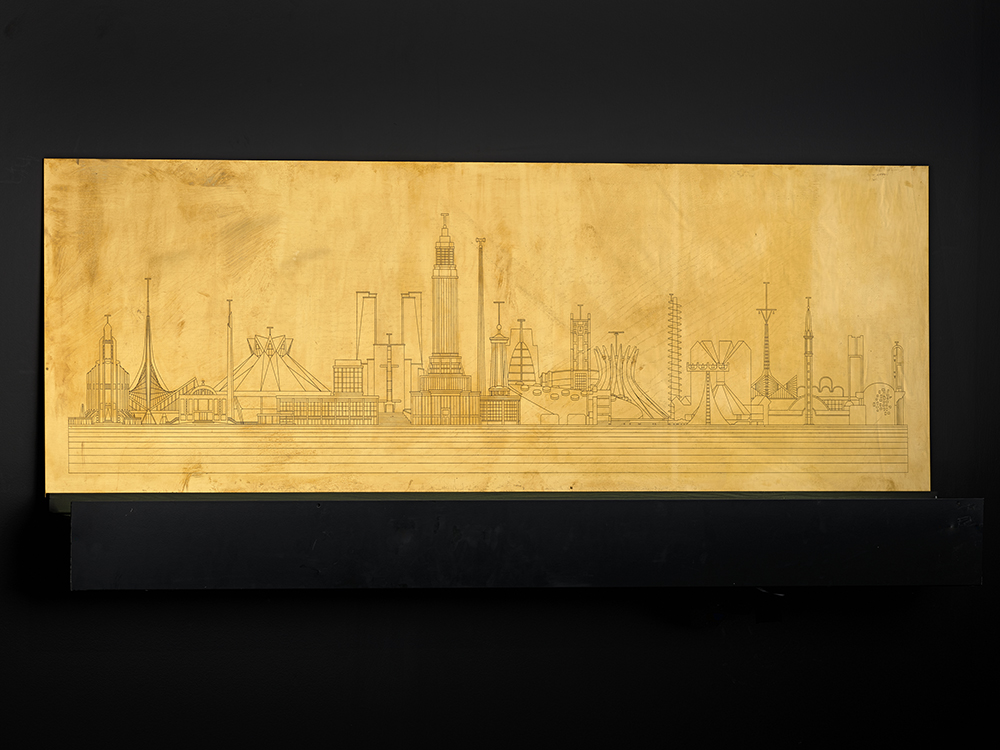
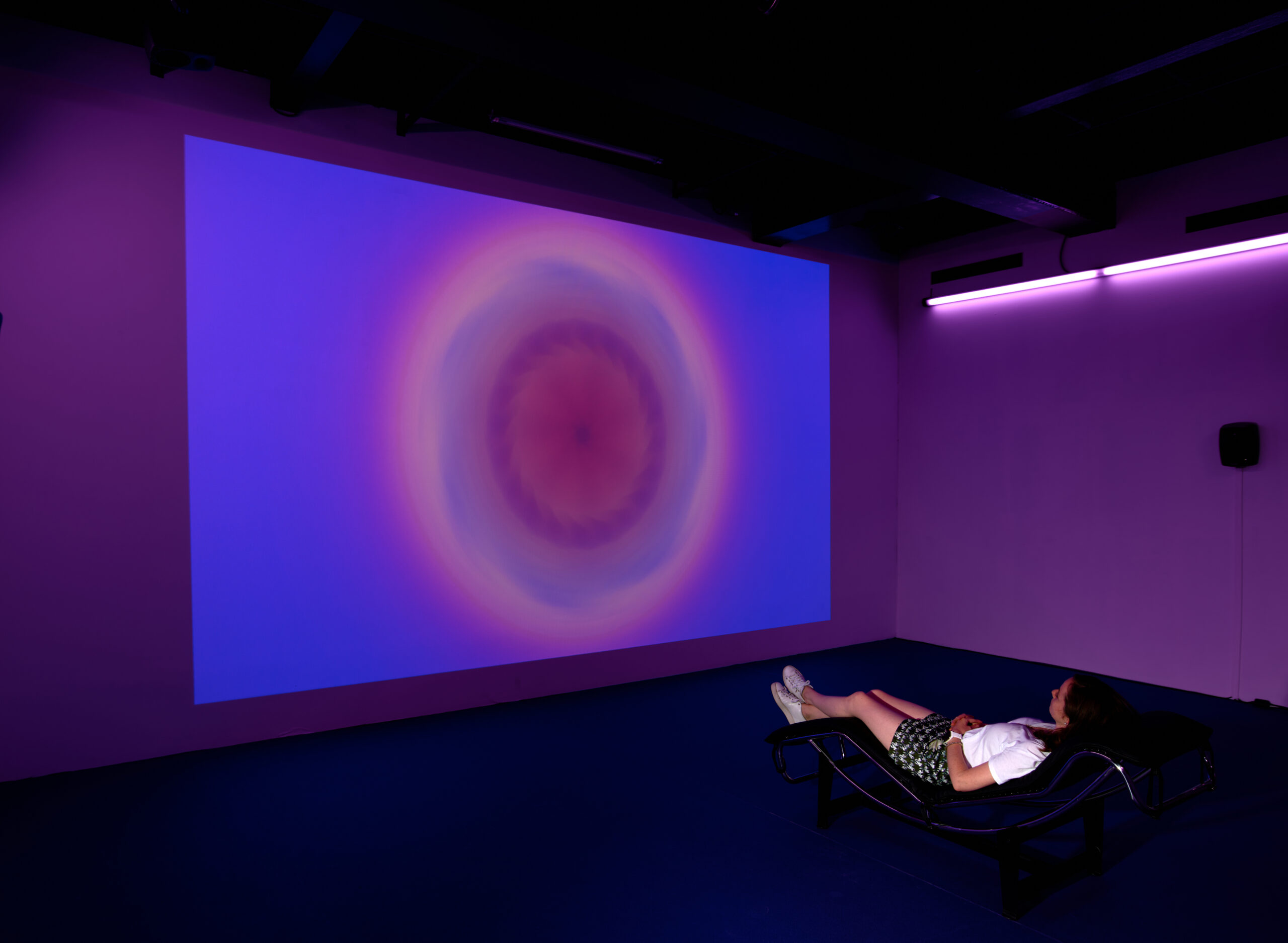
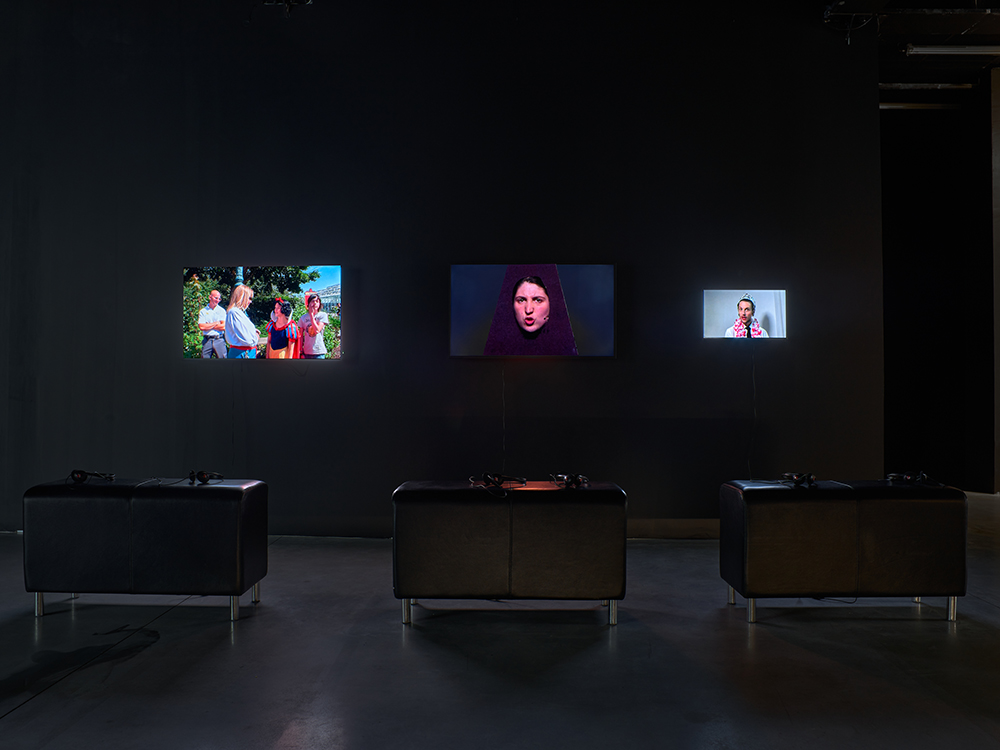
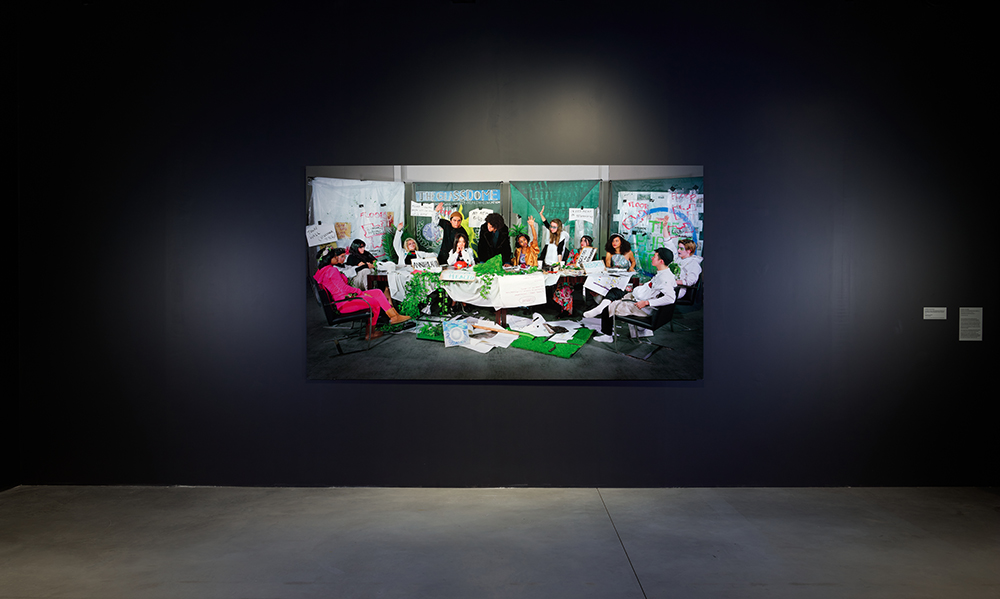
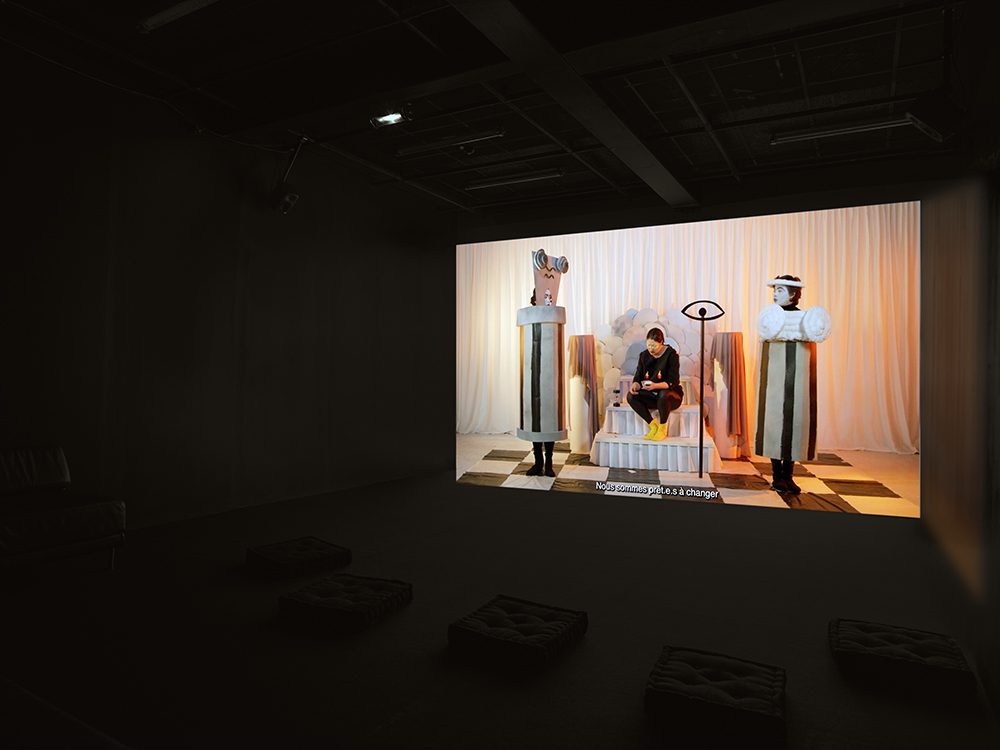


The exhibition explores the relationship between work and the most intimate part of our lives.
Is this all-consuming priesthood compatible with our deepest aspirations and the quest for happiness? Can utopia, emotion and dreams still emerge from its confines? Faced with the pressures of contemporary work, artists are sketching out brighter horizons that put the human being back at the heart of its workings.
francis alÿs
Born in 1959 in Antwerp (Belgium). He lives and works in Mexico City (Mexico).
Francis Alÿs’ work often takes the form of performative actions that he leads alone or that he conceives as major collective and collaborative events. He also develops a pictorial and drawn production that is not unrelated to the themes developed in the performances and that concerns the small repetitive and daily facts that shape our lives. If the performances often stage actions that are sometimes absurd and trying, sometimes lazy and whose final goal seems derisory, an important series of small paintings is interested in the question of sleep.
“Throughout his practice, Francis Alÿs directs his distinct poetic and imaginative sensibility towards anthropological and geopolitical concerns centered on observations and engagements with everyday life, which the artist himselfeven described as «a kind of discursive argument composed of episodes, metaphors or parables». His multifaceted projects, including public actions, installations, videos, paintings and drawings, have involved the longest possible journey between places in Mexico and the States-United; pushing a melting block of ice into the city streets; commissioning sign painters to copy his paintings; filming his efforts to enter the center of a tornado; carry a leaking pot of paint along the disputed border between Israel and Palestine; and equip hundreds of volunteers to move a colossal ten-centimeter sand dune.”
from the David Zwirner Gallery.
Francis Alÿs is represented by the David Zwirner Gallery, New York/Paris/London.
https://francisalys.com
See artist’s page
florænt audoye
Born in 1985 in Montpellier (France). Florænt Audoye lives and works in Paris (France).
It is through humour that Florænt Audoye challenges the institutional and normative frameworks that govern bodies and behaviours. The world of work and its administrative machinery, but also the question of gender are privileged subjects to explore the forms of alienation exercised on individuals. If her practice is mainly performance, Florænt Audoye also uses drawing or video. Also invested in choreographic projects, the artist evolves between the visual arts and the performing arts.
“His almost minimalist performances have the merit of the right dose: a posture, a rhythm, possibly an accessory… nothing else. Seeing them gives way to a refined beauty, between evidence and pleasure. His face is the primary setting around which he composes a universe whose aesthetic dimension is never neglected. An approach that cleverly appropriates the traditional codes of performance for an ultra-contemporary result.”
extrait de Diacritik.
https://www.florentaudoye.fr
See artist’s page
céline berger
Born in 1973 in Saint-Martin-d’Hères (France). She lives and works in Cologne (Germany).
Céline Berger became an artist after twelve years as an engineer. Through video, photography or sculpture, she draws on this field experience to scrutinize new ways of organizing work. Favoring observation over criticism, the artist does not take sides but questions the ambivalences of contemporary management. If it relies so much on people, does it pursue other objectives than unlimited growth and profit? If the corporate culture promotes an atmosphere of conviviality, what can we think of this growing rapprochement between the public and private spheres? So many questions among those that interest Céline Berger.
See artist’s page
alain bernardini
Born in 1960 in Meaux (France). He lives and works in Vitry-sur-Seine (France).
“He is a graduate of the University of Paris 1-Sorbonne Centre Saint-Charles in Fine Arts with a major in literature. He has exhibited regularly since 1992, and is an associate professor at the University of Paris 8 Vincennes/Saint-Denis in the Photography and Contemporary Art department”, extract from Artsper.
Through photography and video, Alain Bernardini challenges the way the world of work is represented by focusing on the moments when people are not working. He puts into images those moments when people are not working, such as breaks, waiting times or informal discussions between colleagues, which are provided for in employment law but never represented. Negotiated and decided jointly with the employees during their working hours and in their place of work, these images can be captured on the spot or staged in postures that sometimes evoke rest, resistance or refusal. In these moments of disconnection from the productive logic of paid work, something else emerges. The worker reclaims a singularity that goes beyond his or her social role. By creating a discrepancy, Alain Bernardini introduces an element of fiction into the tenuous fabric of daily life and routine, which often sums up the reality of professional experience.
See artist’s page
danilo correale
Born in 1982 in Naples, Italy, he lives and works in Naples, Italy and New York, United States.
Danilo Correale, both artist and researcher, focuses most of his activities on the relationship between life and work in the context of a neoliberal society that values hyperproductivity.
« Ma pratique peut être considérée comme une enquête sur l’opacité entourant la politique du temps et les systèmes culturels et économiques complexes, le rôle et l’impact de la technologie sur le travail et sur le corps humain. Travail/Loisirs et Sommeil (et éveil éternel dans la post-modernité) sont devenus un sujet central dans mon travail. Articulé à travers plusieurs stratégies de représentation, d’une exploration picturale de la représentation des données à des approches sensorielles et performatives visant à engager le public dans des exercices tels que la lenteur, la paresse, l’épuisement professionnel, l’ennui et d’autres catégories philosophiques de refus décrites comme l’art de « ne rien faire ». Ma tentative méthodologique, fondée sur le réalisme (ou le réalisme capitaliste) vise à déployer ces thèmes à travers une gamme de stratégies et de pratiques et spéculations esthétiques ; tiré à la fois de l’activisme radical et du courant dominant, de la pleine conscience à l’ésotérisme. Mon utilisation de langages alternatifs pour explorer et reconnaître les régimes d’oppression et d’invisibilité vise à problématiser des thèmes culturels centraux sur la vie des communautés et des identités les plus affectées dans le monde hyper-accéléré et globalisé, ce dernier est aussi une tentative d’identifier et de comprendre différentes formes de refus et les possibilités de sortie. La critique de la vie quotidienne, ou des aspects de la vie quotidienne, sert, dans ma pratique, de projet contre-hégémonique pour s’engager dans un exercice phénoménologique d’apprentissage en désapprenant notre présent et nos rôles en tant que sujets autonomes. », déclaration de l’artiste extraite de son site web.
déclaration de l’artiste extraite de son site web.
http://www.danilocorreale.com
See artist’s page
adelita husni bey
Born in 1985 in Milan (Italy). She lives and works in New York (USA).
Artist and researcher, Adelita Husni Bey questions political and economic powers by often staging in her work micro-utopias and self-managed communities.
“Adelita Husni-Bey is an artist and educator interested in anarco-collectivism, theatre, law and urban studies. It organizes workshops, produces publications, radio programs, archives and exhibition works focused on the use of non-competitive pedagogical models in the context of contemporary art. Working with activists, architects, lawyers, schoolchildren, speech poets, actors, planners, physiotherapists, athletes, teachers and students from different backgrounds, the work focuses on unpacking the complexity of the community. Fix what can never be fixed: what we owe each other.”
from the artist’s website.
Adelita Husni Bey is represented by the galleria Laveronica arte contemporanea, Modica, Italy.
ariane loze
Born in Belgium in 1988. She lives and works in Brussels (Belgium).
Mainly through video and performance, Ariane Loze examines the mechanisms of the world of work – in particular her own position as an artist – and the way in which it sometimes rubs off on our personal lives. Work and the company are symbolised by various characters, some of them recurring and all played by the artist, who from one video to the next distil a critique of social inequalities and also highlight a form of citizen resignation. Some of these archetypal characters also illustrate the loss of meaning felt by individuals in a neo-liberal society where profitability counts for more than people themselves.
With a subtle, well-orchestrated interplay of narrative references, the videos respond to each other, instilling in the viewer a sense of imminent catastrophe or collapse – though these are never stated head-on.
Ariane Loze is represented by Galerie Michelrein, Paris / Brussels.
http://www.arianeloze.com
http://www.arianeloze.com
See artist’s page
leonard qylafi
Born in Albania in 1980. He lives and works in Tirana (Albania).
Leonard Qylafi constructs his work at the confluence of various materials and practices: archives, documents, video, photography, painting and music. He is particularly interested in collective memory and the processing of images, revealing the discrepancies between more or less fictional national narratives and the political and social reality of Albania, particularly that of Tirana, the city in which he lives and works.
“Deeply rooted in personal experience, Leonard’s work is a process of research and mediation between subjects and mediums. Using his knowledge and skills, the artist produces new narratives by elaborating both the aesthetics and the content of the subjects he uses as raw material for his projects. Leonard has been actively involved in the local and international art scene since graduating. He represented Albania at the 57th edition of the Venice Biennale (2017),”
from Harabel.
http://www.leonardqylafi.com
See artist’s page
romana schmalisch & robert schlicht
Born in Berlin (Germany) in 1974 and 1975 respectively. They live and work in Germany.
Artists and directors, Romana Schmalisch and Robert Schlicht have been collaborating regularly since 2004 on projects that combine theoretical research and film. They examine the tensions linked to changes in social contexts, particularly in the world of work.
“Romana Schmalisch studied fine arts at the Berlin University of the Arts. She has been artist-in-residence at a number of institutions, including the Jan Van Eyck Academy in Maastricht, Studio Voltaire in London and Laboratoires d’Aubervilliers. Robert Schlicht studied philosophy at Humboldt-Universität zu Berlin. Together, Schmalisch and Schlicht work at the interface of film and theory to understand how historical processes and societal structures can be reproduced in film. Themes of labour in capitalist societies are central to their exhibitions, performance series and films. Their research has taken them to places such as employment agencies and training centres”.
extract from Haus der Kulturen der Welt.
louise siffert
Born in Strasbourg (France) in 1988. She lives and works in Paris (France).
Performance is at the heart of Louise Siffert’s work. Her theatrical and burlesque productions question contemporary forms of alienation and their supposed remedies: the world of work and management, the theories of coaching and personal development and the place of habits are among her favourite worlds, whose language and visual codes she parodies.
“Louise Siffert trained as a set designer before attending the École nationale supérieure des beaux-arts in Paris. She is a member of DOC, a self-managed artistic space. Using mainly performance, to which she adds the spoken word, Louise Siffert creates narratives about very contemporary issues. The world of work and alienation, the quest for well-being, the place of habits: Louise Siffert’s performances question and relate these current themes in theatrical and burlesque settings. Anchoring her work in scientific and sociological reflections, she creates characters with exaggerated characters, over-exploiting the codes of language and behaviour attributed to them”.
extract from BBB centre d’art.
cally spooner
Born in 1983 in London (England). She lives and works in Athens (Greece).
Cally Spooner bases her work on her interest in writing. She produces plays and short texts devoid of plot, looping monologues, musicals and sound arrangements that allow her to stage the movements and behaviours of language itself.
“Her work consists of installations, plays and essays, novels and performances such as radio broadcasts, games and a musical that address issues of organisation and dispossession of the living. She often uses repetition, or episodic form, as a means and an end in itself”.
extract from GB Agency.
http://www.callyspooner.com
See artist’s page
mladen stilinović
Born in 1947 in Belgrade (Serbia) and died in 2016 in Pula (Croatia). He lived and worked in Zagreb (Croatia).
Mladen Stilinović is one of the main representatives of the Yugoslav conceptual movement that emerged in the 1970s. His work combines texts and symbols in a critical approach aimed at emptying signs of all ideology, particularly those used during the period of socialism. Since the collapse of federal Yugoslavia, his work has focused on major contemporary myths such as money, time, work, language and power.
For Mladen Stilinović, art is not about “doing”, but rather about a certain way of “being”. Questioning the productivity of the artist linked to the market economy, he opts for laziness. An active and positive laziness, conducive to breaking down mental barriers and renewing our vision and thinking.
https://mladenstilinovic.com
See artist’s page
pilvi takala
Born in Helsinki (Finland) in 1981. She lives and works in Berlin (Germany) and Helsinki (Finland).
Through performative interventions in different contexts, Pilvi Takala questions social structures and the normative or implicit rules that shape our attitudes. She often intervenes within companies, as in her work The Trainee, featuring a trainee who does not work, arousing the incomprehension of her colleagues.
« Dans nombre de ses projets, Pilvi Takala se pose en agent provocateur artistique. Elle filme ses interventions infiltrées – souvent en caméra cachée – afin de capturer la façon dont elles perturbent le status quo et défient les codes de comportement établis. Dans Wallflower (2006), par exemple, elle participe à un thé dansant où elle est la seule personne âgée de moins de soixante ans, beaucoup trop habillée dans une robe de bal en satin, assise au bord de la piste de danse et ignorée presque jusqu’à la fin du bal, mais causant un certaine gène par sa présence incongrue. Dans un autre projet, elle déambule dans une rue commerçante bondée avec un sac plastique transparent plein d’argent liquide, capturant les réactions que cela provoquait (Bag lady, 2006). Plus récemment, elle a commencé à créer des projets collaboratifs impliquant la prise de décision partagée, avec un petit groupe d’enfant comme avec la société toute entière. ».
extract from Les ateliers de Rennes.
Pilvi Takala est représentée par la galerie Helsinki contemporary, Finlande.
https://pilvitakala.com
See artist’s page
thomas tudoux
Born in 1985 in Barbezieux (France). He lives and works in Rennes (France).
Thomas Tudoux is deeply concerned with social issues, and makes them the subject of his work, often turning to collaborative practices involving the participation of citizens.
“Thomas Tudoux is a young artist whose practice offers a critical and scathing approach to the voluntary servitudes in which we hold ourselves on a daily basis, aided by our technical tools. He sets up absurd evaluation procedures to ward them off, attacking the mechanisms of action with Sisyphean perseverance, perhaps out of fear of inaction, or on the contrary of misplaced or pointless activism. His lists, series of notes and instructions are all points of reference to hold on to in the face of the threat of chaos and the total loss of meaning and values, in the face of the uncertainty of what is to come.
Thomas Tudoux’s approach combines a certain simplicity, the prosaic nature of everyday life and its neuroses, with a relevance that is in tune with the period of general disorientation we are experiencing. It questions the need to remain in action, in doing, without any moralism and without giving us any answers as to what we must do to survive and rediscover meaning in our lives”.
extract from Cnap.
The exhibition explores the relationship between work and the most intimate part of our lives.
Is this all-consuming priesthood compatible with our deepest aspirations and the quest for happiness? Can utopia, emotion and dreams still emerge from its confines? Faced with the pressures of contemporary work, artists are sketching out brighter horizons that put the human being back at the heart of its workings.
Sorry, the comment form is closed at this time.