


l’idée des corps célestes
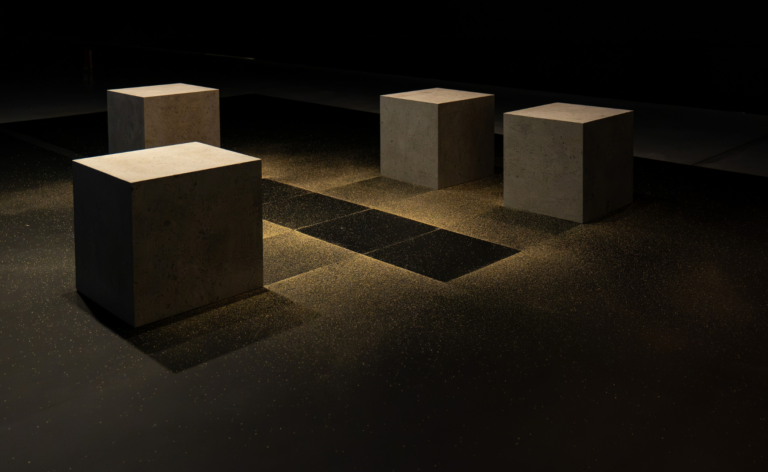
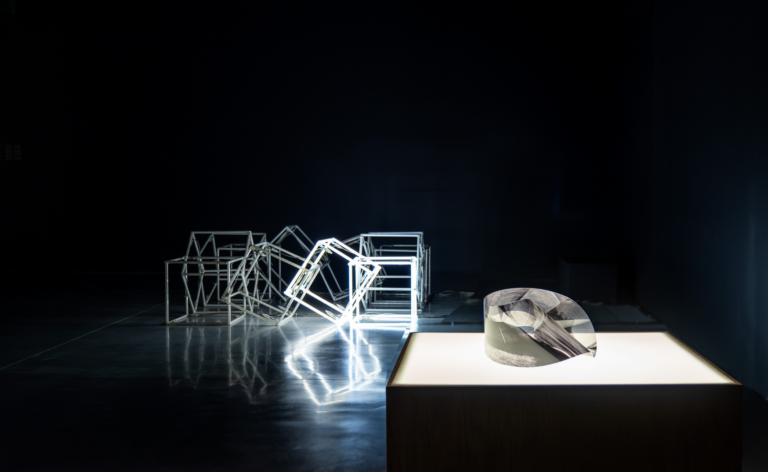
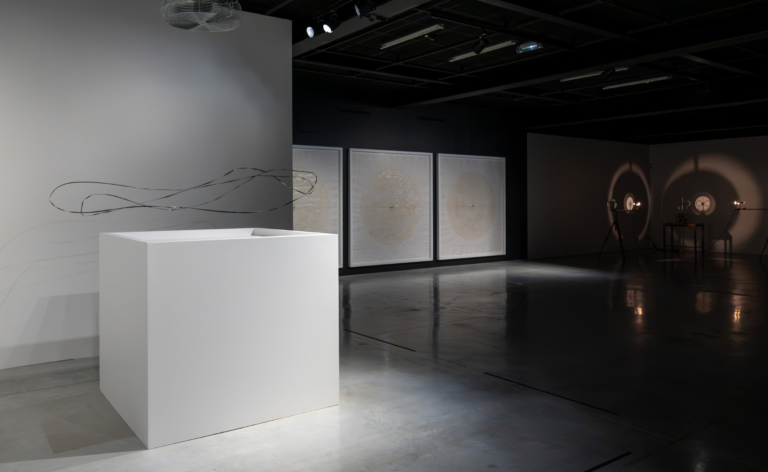
In 2026, as part of the regional programme AR(t]CHIPEL dedicated to Alexander Calder, the cccod is developing a two-part program exploring the artist’s living legacy and lasting impact on contemporary art.
This season will bring contemporary practices and historical perspectives into dialogue through a group exhibition in the summer, followed by a monographic exhibition in autumn 2026
l’idée des corps célestes (the idea of celestial bodies)
10.07.26 – 03.01.27 : black gallery / 10.07.26 – 13.09.26 : nave (Marc Fornes)
Attila Csörgö • Marc Fornes • Jeppe Hein • Žilvinas Kempinas • Jaume Plensa • Valerie Snobeck • Francisco Tropa • Hema Upadhyay
In 2026, as part of the regional programme dedicated to Alexander Calder, the cccod is developing a preliminary programme that seeks to examine the persistence of the American artist’s founding principles within contemporary practices.
His studio in Saché, transformed in 1989 into a space dedicated to artistic residencies, has hosted more than seventy artists over the years. From this history, we have identified a number of figures, and above all certain practices, that resonate with the ever-renewed experimental spirit of Calder’s work.
Influenced as much by the scientific discoveries and technological innovations of his time as by a pragmatic, everyday sensibility, Alexander Calder developed an approach whose apparent simplicity draws on the fleeting sense of lightness that daily life can sometimes afford.
Working across both sculpture and what might be termed an “anti-sculptural” mode, and engaging with physical principles such as gravity and balance, Calder produced works situated at the threshold between sculpture and machine. Through their lightness and mobility, these works assume shifting, transitory appearances, never settling into a fixed or definitive state of perception.
From this constellation of concerns, we have brought together eight artists who, in the years after him, briefly stayed in Saché—tracing his footsteps and creating within the environment and studio he had initially conceived for his own practice.
The works of seven of them will be presented in dialogue within the black gallery, while, in resonance, a monumental piece by Marc Fornes will occupy the nave, serving as a prefiguration of the installation of three large-scale Mobiles by Alexander Calder (from October 2026).
This exhibition is presented thanks to the exceptional loans generously provided by the Centre Pompidou, the Cnap, the Atelier Calder, the Frac Bretagne, the Frac des Pays de la Loire, the Frac Picardie, Les Abattoirs, Musée-Frac Occitanie et the Musée de Rochechouart.

Attila Csörgö
Marc Fornes
Jeppe Hein
Žilvinas Kempinas
Jaume Plensa
Valerie Snobeck
Francisco Tropa
Hema Upadhyay
In 2026, as part of the regional programme AR(t]CHIPEL dedicated to Alexander Calder, the cccod is developing a two-part program exploring the artist’s living legacy and lasting impact on contemporary art.
This season will bring contemporary practices and historical perspectives into dialogue through a group exhibition in the summer, followed by a monographic exhibition in autumn 2026
l’idée des corps célestes (the idea of celestial bodies)
10.07.26 – 03.01.27 : black gallery / 10.07.26 – 13.09.26 : nave (Marc Fornes)
Attila Csörgö • Marc Fornes • Jeppe Hein • Žilvinas Kempinas • Jaume Plensa • Valerie Snobeck • Francisco Tropa • Hema Upadhyay
In 2026, as part of the regional programme dedicated to Alexander Calder, the cccod is developing a preliminary programme that seeks to examine the persistence of the American artist’s founding principles within contemporary practices.
His studio in Saché, transformed in 1989 into a space dedicated to artistic residencies, has hosted more than seventy artists over the years. From this history, we have identified a number of figures, and above all certain practices, that resonate with the ever-renewed experimental spirit of Calder’s work.
Influenced as much by the scientific discoveries and technological innovations of his time as by a pragmatic, everyday sensibility, Alexander Calder developed an approach whose apparent simplicity draws on the fleeting sense of lightness that daily life can sometimes afford.
Working across both sculpture and what might be termed an “anti-sculptural” mode, and engaging with physical principles such as gravity and balance, Calder produced works situated at the threshold between sculpture and machine. Through their lightness and mobility, these works assume shifting, transitory appearances, never settling into a fixed or definitive state of perception.
From this constellation of concerns, we have brought together eight artists who, in the years after him, briefly stayed in Saché—tracing his footsteps and creating within the environment and studio he had initially conceived for his own practice.
The works of seven of them will be presented in dialogue within the black gallery, while, in resonance, a monumental piece by Marc Fornes will occupy the nave, serving as a prefiguration of the installation of three large-scale Mobiles by Alexander Calder (from October 2026).
This exhibition is presented thanks to the exceptional loans generously provided by the Centre Pompidou, the Cnap, the Atelier Calder, the Frac Bretagne, the Frac des Pays de la Loire, the Frac Picardie, Les Abattoirs, Musée-Frac Occitanie et the Musée de Rochechouart.
Sorry, the comment form is closed at this time.